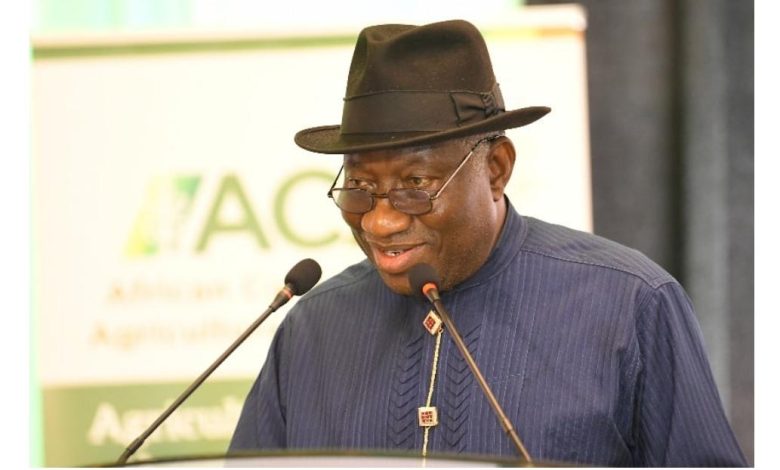
Former President Goodluck Jonathan has formally moved to challenge a lawsuit seeking to prevent him from contesting the 2027 presidential election.
The case, currently before a Federal High Court in Abuja, was filed by a legal practitioner who is asking the court to declare Jonathan ineligible to run for president in the upcoming general election.
In response, Jonathan’s legal team has urged the court to dismiss the suit outright. They argue that the matter raised in the case has already been addressed and resolved by higher judicial authorities in the past.
During the hearing, counsel to the former president informed the court that several legal documents had already been submitted in opposition to the suit. These include a preliminary objection, counter-affidavit, and written address, all aimed at stopping the case from proceeding.
The defence further maintained that the claims made by the plaintiff lack legal merit, insisting that the issue of eligibility being raised is not new and has previously been settled within Nigeria’s constitutional interpretation framework.
On the other hand, the plaintiff’s lawyer requested additional time to properly study Jonathan’s legal response. He told the court that the documents were served on him recently and that he needed adequate time to prepare his counter-arguments.
Following submissions from both sides, the court adjourned the matter to allow proper consideration of the filings presented. The adjournment also gives room for further legal arguments on whether the case should continue or be struck out at the preliminary stage.
The case has drawn attention due to its potential political implications ahead of the 2027 general elections. Although Jonathan has not officially declared any intention to run, his name has continued to surface in political discussions and speculation about possible contenders.
Analysts say the lawsuit reflects growing political tension and legal positioning as Nigeria gradually approaches another election cycle. The outcome of the case could also influence broader interpretations of constitutional provisions regarding presidential eligibility.
Goodluck Jonathan, who served as Nigeria’s president from 2010 to 2015, remains a significant figure in the country’s political history. His administration is often referenced in discussions about democratic transitions and electoral outcomes in Nigeria.
The ongoing court dispute is therefore being closely monitored by political observers, legal experts, and stakeholders within Nigeria’s political space. Many believe the ruling could set a precedent for future electoral eligibility debates.
As the matter continues, attention now shifts to the Federal High Court, where the next hearing is expected to determine the direction of the legal battle ahead of the 2027 election season.