Cambridge and Alsama Project Partner to Expand University Access for Refugees and Displaced Youth

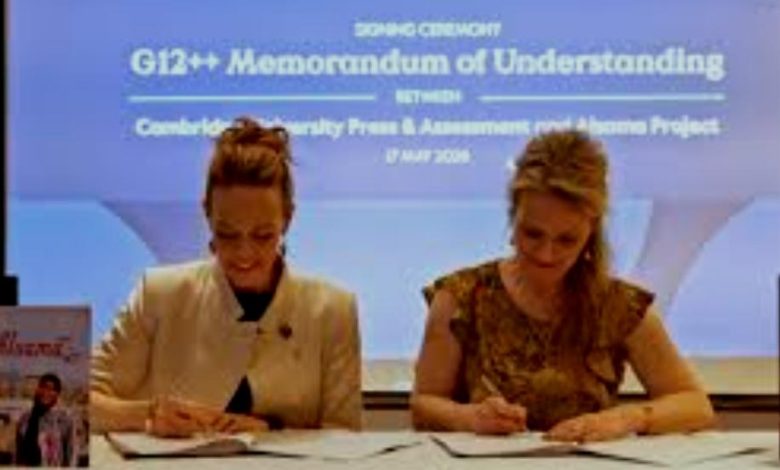
The global effort to widen access to education for displaced young people has received a boost following a new partnership between Cambridge University Press & Assessment and Alsama Project. The collaboration is focused on creating structured academic pathways for refugees and youths whose schooling has been disrupted by conflict or forced migration.
At the centre of the initiative is a new qualification known as the G12++, designed as an alternative to traditional secondary school certifications. It aims to provide a credible academic benchmark that can be recognised by universities and employers, particularly for learners who cannot complete conventional national curricula due to instability in their environments.
Unlike standard exam systems, the G12++ is designed to be curriculum-agnostic, assessing core competencies and real-world skills rather than focusing on a single national education framework. This approach is intended to ensure fairness for students who have studied under different or interrupted learning conditions.
The partnership brings together Cambridge’s expertise in assessment design, quality assurance, and global education standards with Alsama’s experience in delivering education to displaced communities in challenging environments. Together, both organisations hope to address a major barrier facing millions of young people worldwide: lack of formal recognition for their learning achievements.
The programme is expected to begin phased implementation in 2026, with potential pilot adoption in regions hosting large displaced populations. While no official quotes were released at the time of reporting, both institutions have previously emphasised the importance of inclusive education models that respond to global displacement challenges.
If successful, the initiative could reshape how universities evaluate applicants from disrupted education systems and open new pathways for higher learning and employment opportunities for vulnerable youth across the world.