
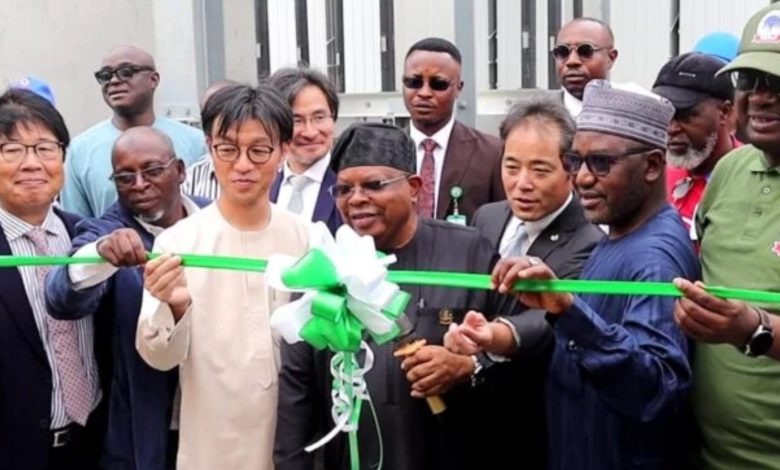
Lagos businesses and households just got some good news. To tackle grid bottlenecks and support economic growth, the Federal Government on August 17 and 18 inaugurated major transmission upgrades across four key Lagos substations: Apapa, Ijora, Lekki, and Alausa.
Led by the Minister of Power, Mr Joseph Tegbe, the projects add 840MVA of new transformer capacity to the national grid, power that will be fed to Eko and Ikeja Electricity Distribution Companies for homes, markets, and factories.
What was Upgraded?
- Lekki 330/132/33kV Substation: Got a major upgrade with one 300MVA and two 60MVA transformers. This effectively doubled capacity here, from 300MVA to 600MVA at the 330/132kV level, and from 120MVA to 240MVA at 132/33kV. The station also gets 9 new 33kV feeders to push more power into EKEDC’s network.
- Alausa Substation: A new 100MVA transformer raised total capacity from 135MVA to 205MVA, adding 80MW of bulk power for IKEDC to serve Ikeja and environs.
- Apapa Substation: Commissioned a new 2x60MVA Gas Insulated Substation to boost bulk supply to EKEDC.
- Ijora Substation: Upgraded from 90MVA to 230MVA, targeting improved supply to Ijora, Costain, Oyingbo, Customs and nearby areas.
Why it Matters
Speaking at the inauguration, Minister Tegbe said the projects were “targeted investments for businesses to grow, for industries to produce, and for communities to prosper.”
He singled out Lekki and Ikeja as economic hotspots where reliable power is non-negotiable.
“Ikeja is where the ambition of Nigeria meets the industrious nature of Nigerians,” he said.
The TCN Managing Director, Mr Sule Abdulaziz, added that the upgrades will improve grid stability and reduce technical losses. He noted TCN can now wheel more bulk power to EKEDC and IKEDC for onward distribution.
The projects were delivered by JICA under its Official Development Assistance programme, with support from the World Bank, Lagos State Government, and TCN engineers.
What Experts are Saying
Industry watchers say this is a step in the right direction. If well utilised, the new capacity could help businesses cut costs on diesel, attract new investments, create jobs, and give communities more stable electricity.
In short: more megawatts in, fewer blackouts out. For Lagos, Nigeria’s economic engine, that’s the kind of infrastructure upgrade that can actually move the needle.