Who Gets to Be American? Trump’s Birthright Citizenship Battle Heads for Supreme Court.

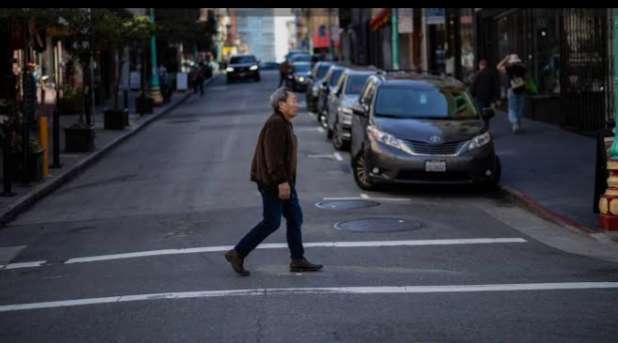
A fierce legal battle over who qualifies as an American citizen is once again heading to the U.S. Supreme Court — more than a century after a landmark ruling settled the issue. At the centre of the new fight is President Donald Trump and his controversial push to limit birthright citizenship in the United States.
The dispute mirrors a dramatic case from the late 1800s involving Wong Kim Ark, a Chinese-American man whose fight for recognition as a U.S. citizen reshaped constitutional law.
Back in the 19th century, amid strong anti-Chinese sentiment, the U.S. government tried to block Wong from returning to the country after a visit to China, arguing that although he was born in San Francisco, he was not entitled to citizenship because his parents were Chinese nationals.
But in 1898, the U.S. Supreme Court delivered a historic decision, ruling that the Fourteenth Amendment to the United States Constitution guarantees citizenship to nearly everyone born on American soil — including children of foreign nationals like Wong.
A Descendant Raises Alarm
More than a century later, Wong’s great-grandson, Norman Wong, fears that the principle his ancestor fought for could now be under threat.
“Wong Kim Ark knew he was an American and fought to have that recognised,” the 76-year-old San Francisco resident said. “He didn’t create the rule — he proved it.”
The issue is back before the Supreme Court as the justices prepare to hear arguments over the legality of Trump’s executive order restricting automatic citizenship for children born in the United States to parents who are neither citizens nor permanent residents.
Trump signed the directive in January 2025 on his first day back in office, as part of a broader immigration crackdown. The administration argues that unrestricted birthright citizenship encourages illegal immigration and fuels so-called “birth tourism,” where foreigners travel to the U.S. specifically to give birth so their children gain citizenship.
Critics, however, say the order violates the Constitution and is rooted in anti-immigrant sentiment.
If upheld, Trump’s order would deny citizenship to babies born in the U.S. to undocumented immigrants or people staying temporarily in the country, such as students or workers on visas.
Legal experts say the case could have sweeping consequences. Some estimates suggest up to 250,000 babies born each year in the United States could be affected, potentially forcing millions of families to prove their children’s citizenship status.
The Supreme Court — which currently has a 6-3 conservative majority — previously handed Trump a partial victory by limiting the power of federal judges to block presidential policies nationwide. However, the court did not rule on whether his birthright citizenship policy itself was constitutional.
Wednesday’s hearing is expected to tackle that central question.
A Tough Legal Road Ahead: Many constitutional scholars believe the administration faces a difficult challenge because of both the long tradition of birthright citizenship and the precedent established in the Wong Kim Ark case.
The Citizenship Clause of the Fourteenth Amendment states that anyone born or naturalised in the United States — and subject to its jurisdiction — is automatically a citizen. The amendment was ratified in 1868 following the Civil War, overturning the infamous Dred Scott v. Sandford decision that had denied citizenship to people of African descent.
Experts note that historically the only major exceptions have been children of foreign diplomats or occupying enemy forces.
Still, the Trump administration argues that citizenship should not extend to children of people in the country illegally or temporarily.
The Soul of America: Norman Wong, who spent much of his life unaware of his ancestor’s legacy, says the current legal fight carries profound implications for the country.
He believes the executive order could be the beginning of a broader attempt to narrow who counts as American.
“I don’t see this as the end,” he said. “It’s the start of chipping away at citizenship — deciding who belongs and who doesn’t. And that’s really about the soul of America.”