
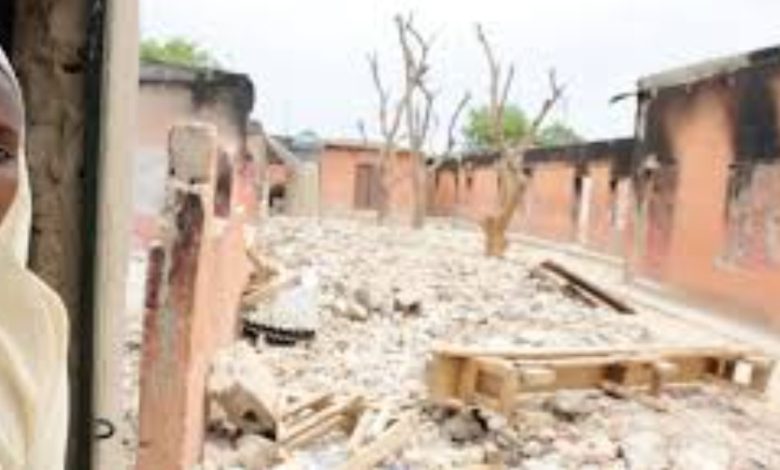
Late Saturday night, terror returned to Kwapul community, Chibok L.G.A. as suspected insurgents launched a devastating raid that stretched into the early hours of Sunday.
According to reports, the attackers set a church and several homes ablaze in what residents described as a carefully coordinated assault on the predominantly Christian settlement.
While no deaths were reported, the attack left families displaced and traumatised, sparking urgent calls for immediate government intervention.
Locals revealed that the “attackers operated for hours without resistance,” highlighting the ongoing vulnerability of rural communities despite years of counterinsurgency efforts in the northeast.
The timing of the assault is particularly troubling, coming during the Easter season – a period when Christian communities in Nigeria’s conflict-prone regions have historically been targeted.
In recent years, Christian-majority areas in Borno State, Adamawa State, and Plateau State have suffered similar attacks, with churches vandalised, worshippers killed, and homes destroyed.
Chibok itself bears a painful history. In April 2014, over 270 schoolgirls were abducted from their dormitories by insurgents, an event that drew international outrage and exposed the deep insecurity in northeastern Nigeria. Over a decade later, some of the girls have been rescued or escaped, but others remain missing, and the community continues to feel the lingering trauma.
Residents now fear that such attacks will persist, and local leaders are urging swift action from the Nigerian government and security agencies. They warn that failure to respond could embolden attackers further and worsen the humanitarian crisis in the region.