A protest leader has warned that demonstrators are prepared to “bring the country to a standstill” unless fuel prices in the Republic of Ireland are drastically reduced.
Kildare-based farmer, John Dallon said the ongoing protests could stretch on for weeks, as anger grows over rising fuel costs linked to global tensions.
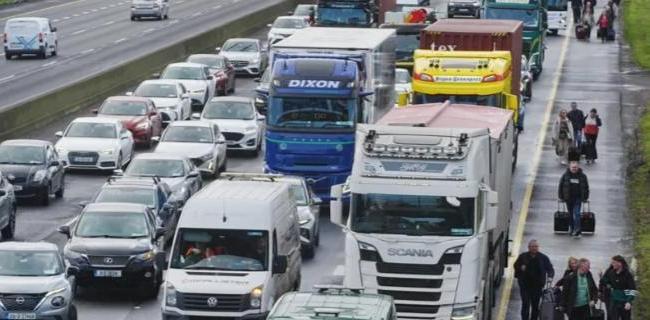
Across the Republic of Ireland, transport has been heavily disrupted for a fourth consecutive day, with tractors, trucks, and other vehicles blocking major roads and intersections.
Travellers heading through Dublin Airport have been urged to plan ahead and allow extra time, after commuters were seen walking along motorways carrying luggage due to widespread road closures.
Dallon, who is among the key figures behind the demonstrations, told Irish broadcaster, RTÉ, that the action is far from over.
“This could go on for another week, maybe two. Even a month — we’re ready to stay put if that’s what it takes,” he said.
Protesters have also positioned themselves at key fuel facilities, including terminals in Foynes (County Limerick), Galway Port, and the Whitegate Oil Refinery in East Cork, where police presence has been deployed.
Authorities say they are closely monitoring the situation, while Irish police continue to engage with demonstrators at affected sites.
Speaking on the situation, Minister for Enterprise, Tourism and Employment, Peter Burke said no enforcement action had yet been taken against protesters, but other officials have warned that legal consequences could follow.
Fuel suppliers report growing disruption, with dozens of petrol stations already running dry and fears that shortages could worsen rapidly if blockades continue.
Health officials have also raised concern, warning that restricted access to hospitals and clinics could seriously impact patient care, with missed appointments already being reported.
Protesters say their action is driven by unbearable fuel costs and rising living pressures, with many calling for urgent government intervention, including price caps and tax relief.