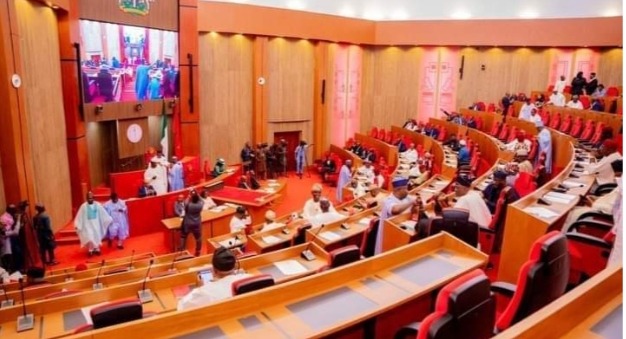
Barely a day after the Senate introduced fresh rules tightening eligibility for top leadership positions, Senate President, Godswill Akpabio, and Senator Adams Oshiomhole were involved in a tense confrontation on the floor of the upper chamber on Wednesday, May 6, 2026.
The new amendment – passed just 24 hours earlier – now restricts eligibility for presiding and principal offices to senators who have served at least two consecutive terms, effectively shutting out Oshiomhole from contesting for any presiding role in the 11th Senate.
Tensions flared when Oshiomhole attempted to raise a point of order during proceedings while Akpabio moved to adopt the previous day’s votes and proceedings.
Despite being recognised, Oshiomhole’s intervention was ignored, prompting him to repeatedly insist on his “point of order” even after his microphone was switched off.
Efforts by Senate Chief Whip, Mohammed Monguno, to restore order failed, as Oshiomhole continued to interrupt proceedings.
“I am now invoking the powers conferred on me as the Chief Whip of the senate for you to return to your seat. Be guided,” Monguno said, but the Senator reportedly refused to comply.
The situation escalated further when Akpabio stepped in, citing Senate rules governing order and conduct within the chamber.
He reminded lawmakers of the powers vested in the Senate President, including maintaining order during debates, interpreting rules, and presiding over votes.
“The Senate President is tasked with maintaining order during debates and giving rulings on points of constitutional order,” Akpabio stated, warning Oshiomhole against disorderly conduct.
“If any member becomes unruly in the Senate, such a member will be asked to leave. This is the final warning.”
The session also saw Senator Patrick Ndubueze (Imo North) raise concerns over alleged omissions in the previous day’s votes and proceedings, arguing that a resolution had not been properly debated or adopted. However, Akpabio dismissed the objection and proceeded with a voice vote, ruling in favour of the “ayes” despite opposition from the “nays.”
The controversy comes against the backdrop of Tuesday’s closed-door amendment of Senate standing orders, which now require at least eight years of uninterrupted service for eligibility to contest for Senate President or Deputy Senate President.
The move has sparked political speculation ahead of the 2027 leadership race, with some prominent figures reportedly eyeing a return to the red chamber.