LONDON, UNITED KINGDOM — Keir Starmer Reportedly Preparing Exit as Pressure Mounts Within Labour
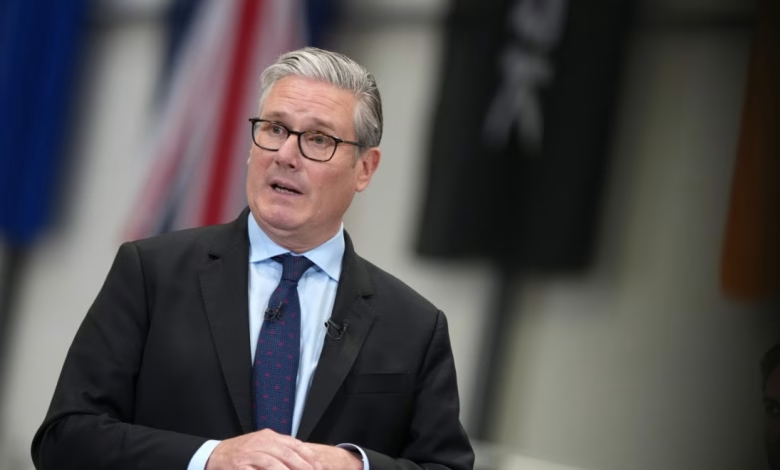
British Prime Minister Keir Starmer is facing the most serious political crisis of his premiership, with reports suggesting he is preparing to announce a timetable for his departure amid growing pressure from within the governing Labour Party. However, as of Sunday evening, no official resignation has been announced, and Starmer continues to insist he intends to remain in office.
The dramatic developments come less than two years after Starmer led Labour to a landslide general election victory, ending 14 years of Conservative rule. What was once seen as a stable administration has been shaken by falling public approval ratings, internal party divisions, policy reversals, and growing concerns among Labour MPs about the party’s electoral prospects.
Reports of an Imminent Departure
According to multiple reports published, Starmer has been holding discussions with senior allies and family members about his political future. The Observer reported that he could announce an orderly departure plan as early as Monday, potentially paving the way for a Labour leadership transition.
Government sources, however, have pushed back against suggestions that a decision to resign has already been made, insisting that the Prime Minister remains focused on governing and carrying out his duties.
The uncertainty has created intense speculation across Westminster, with Labour MPs, ministers, and political commentators closely watching for any sign of a formal announcement.
Why Starmer’s Leadership Is Under Threat
The pressure on Starmer has been building for months.
His leadership first came under sustained scrutiny following disappointing local election results earlier this year, prompting calls from Labour MPs for a change in direction. More recently, a series of ministerial resignations and public disagreements over government policy further weakened his authority.
Among the most damaging developments was the resignation of Defence Secretary John Healey, who publicly questioned the government’s ability to meet Britain’s defence commitments. The resignation intensified concerns within Labour about Starmer’s grip on government and his ability to maintain party unity.
Reports indicate that more than 100 Labour MPs have privately or publicly called for Starmer to step aside, arguing that the party needs new leadership to restore public confidence and prevent further political decline.
Andy Burnham Emerges as Front-Runner
The political crisis escalated dramatically after Andy Burnham secured a significant parliamentary victory in the Makerfield by-election.
Burnham’s win has energised his supporters and prompted many Labour MPs to view him as the natural successor to Starmer. Reports suggest Burnham has already secured substantial backing among Labour parliamentarians, with some estimates placing his support at more than half of the parliamentary party.
Several Labour figures reportedly believe Burnham could become leader with little opposition if Starmer decides to step down voluntarily. Others are calling for a full leadership contest to ensure members and affiliated organisations have a say in choosing the next leader.
Starmer’s Public Position
Despite the mounting pressure, Starmer has repeatedly rejected suggestions that he should resign.
In recent interviews and cabinet meetings, he has insisted that he still has the authority to govern and has pledged to fight any formal leadership challenge. He argues that whoever succeeds him would face the same economic constraints and policy challenges confronting the government today.
“I’m not going to walk away,” Starmer said in remarks reported by Reuters earlier this month, emphasising that his determination to stay is based on a sense of duty rather than personal ambition.
What Happens Next?
If Starmer resigns as Labour leader, the party would begin the process of selecting a new leader, who would likely become Prime Minister because Labour currently holds a parliamentary majority. A general election would not automatically be required.
Several scenarios are now being discussed:
- Starmer announces a timetable for departure and remains Prime Minister during a transition period.
- Labour launches a formal leadership contest.
- Burnham secures overwhelming support and becomes the leader without a prolonged contest.
- Starmer resists pressure and attempts to defeat a leadership challenge.
Political Significance
The crisis represents one of the most significant moments in British politics since Labour’s return to power in 2024. A change of leadership would reshape the government’s agenda and could influence Britain’s economic, domestic, and foreign policy direction heading into the second half of the decade.
For now, the political future of Keir Starmer remains uncertain. While reports suggest preparations for an exit are underway, the Prime Minister has not formally resigned, and Downing Street continues to maintain that he remains focused on governing. The coming days are expected to determine whether Starmer can survive the rebellion within his party or whether Labour is about to enter a new political era under different leadership.