
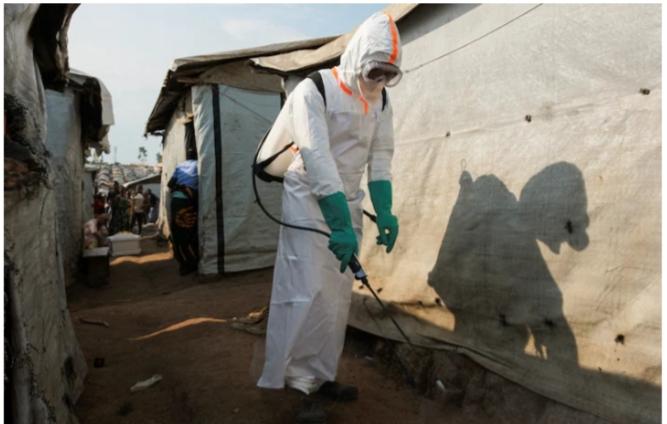
The United Nations has warned that Africa could suffer economic losses of up to $3.6 billion and lose hundreds of thousands of jobs if the ongoing Ebola outbreak spreads further across the continent.
The warning was issued on Tuesday, June 30, 2026, as health authorities continue efforts to contain the deadly Bundibugyo strain of the virus, which currently has no approved vaccine or proven treatment.
According to figures released by the government of the Democratic Republic of the Congo, the outbreak has infected 1,307 people and claimed 377 lives since it was officially declared on May 15, 2026.
While most of the infections have been recorded in the Democratic Republic of the Congo, a smaller number of cases have also emerged in neighbouring Uganda, raising concerns among health experts about possible transmission to other countries in the region, including South Sudan.
Damien Mama, the United Nations Development Programme’s Resident Representative in the Democratic Republic of the Congo, warned that urgent intervention is needed to prevent the health crisis from escalating into a broader development disaster.
“If we have the resources and we step up, we can contain this outbreak and prevent further losses,” he said.
“If we do not, this health emergency risks becoming a much deeper and prolonged development crisis across the region and potentially the continent.”
The UNDP outlined three possible scenarios for the outbreak’s impact on Africa’s economy.
Under the most optimistic projection, where the outbreak remains largely confined to the Democratic Republic of the Congo and Uganda, Congo’s economy alone could lose as much as $1 billion in Gross Domestic Product.
However, in the worst-case scenario, the virus spreads to additional countries including Rwanda and Angola while coinciding with rising fuel prices linked to the Iran crisis, reducing Africa’s overall GDP by $3.6 billion and wiping out an estimated 328,000 jobs across the continent.
The warning underscores growing fears that the Ebola outbreak could evolve from a public health emergency into one of Africa’s most significant economic and development challenges in recent years.