US withdraws most troops from Nigeria after Lake Chad Counterterrorism Mission
Washington says operation completed but confirms continued intelligence cooperation with Abuja against ISIS-linked groups

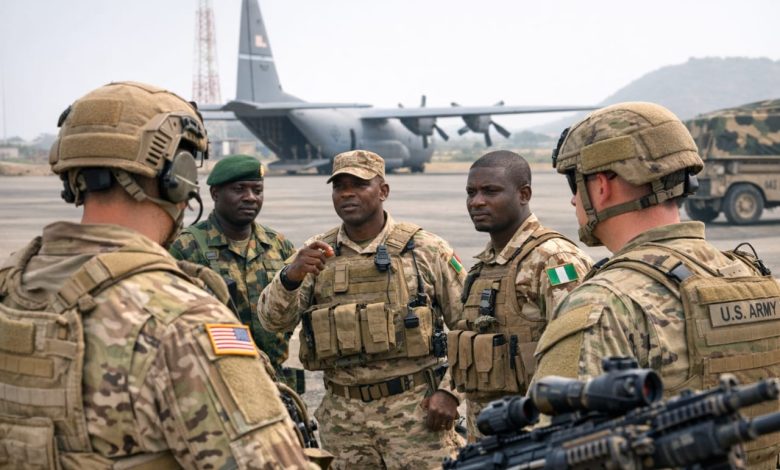
The United States has withdrawn most of its military personnel deployed to Nigeria for a joint counterterrorism operation in the Lake Chad Basin, while maintaining intelligence sharing and broader security cooperation with Nigerian authorities.
The development was confirmed by Commander of US Air Forces in Africa, General Dagvin R. M. Anderson, during a virtual briefing on the outcome of the African Chiefs of Defence Conference 2026.
According to Anderson, the mission that required the deployment of US troops has been completed, leading to the drawdown of forces. He said Washington will continue working with Abuja through intelligence support, particularly in operations targeting Islamic State (ISIS/Daesh) networks.
“That operation in the Lake Chad Basin of Nigeria not only helped the countries in that immediate region; it also helps countries globally as that disrupts the ISIS network,” Anderson said.
He added that while most troops have been withdrawn, cooperation remains active at Nigeria’s request, especially in intelligence sharing and operational support.
“We have withdrawn much of our forces that were just there for that operation, but are continuing the partnership that Nigeria has asked for,” he said.
Anderson described Nigeria as a key regional partner with a capable military and noted that joint intelligence efforts had contributed to significant operational successes against ISIS-linked targets.
He also credited intelligence collaboration between both countries for enabling a joint operation that reportedly led to the elimination of a senior ISIS figure described as the group’s second-in-command globally.
“Nigeria is a very capable and large country. It has a strong economy, a large educated population, and a very capable military,” he said.
According to him, US involvement focused on providing specialised intelligence and capabilities that complemented Nigerian operations.
The commander also highlighted broader multinational cooperation efforts, including a recent maritime drug interdiction operation that resulted in the seizure of 31 tons of cocaine, described as the largest such seizure on record.
Anderson said sustained collaboration between African governments, international partners, and private stakeholders remains essential in addressing terrorism, drug trafficking, and other transnational threats.
United States forces had been deployed to Nigeria in February 2026, with about 200 personnel supporting intelligence, surveillance, and counterterrorism operations in the Lake Chad Basin.
The deployment followed intensified joint efforts between both countries against ISIS-linked groups operating in the region, including reported airstrikes in parts of Sokoto State in late 2025.
A key milestone in the partnership was recorded in May 2026, when a joint operation reportedly killed a senior ISIS commander in Borno State during a raid on his hideout.