
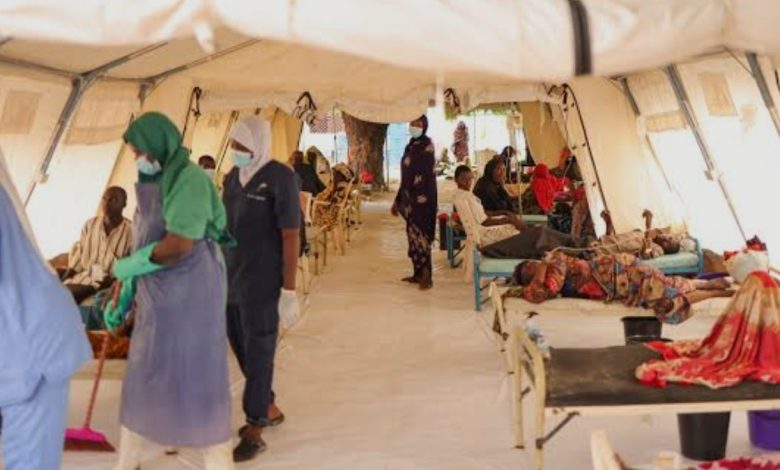
Authorities in Borno State have ramped up cholera response efforts as suspected cases rise to over 12,000 across 16 local government areas, with at least 95 deaths recorded since the outbreak began in early May 2026.
The outbreak, which started in Maiduguri Metropolitan Council and Jere LGA, has now spread to LGAs including Mafa, Konduga, Monguno, Ngala, Magumeri and others, overwhelming treatment facilities and health workers.
Health officials attribute the surge to unsafe water, poor sanitation, overcrowded internally displaced persons camps, and the ongoing rainy season, which has contaminated water sources.
Scale of the Outbreak
According to the Borno State Ministry of Health, 7,850 suspected cases were recorded across 14 LGAs as of June 7. By June 17, that figure had climbed to more than 12,000 cases in 16 LGAs, with MMC remaining the epicentre with over 2,000 cases reported in May alone.
Strengthening Treatment Capacity
In response, humanitarian agencies and the state government have expanded treatment capacity across the state.
Médecins Sans Frontières, MSF, established a Cholera Treatment Centre in Ngarannam, Maiduguri, on May 7 and later expanded it from 121 to 271 beds. The facility has treated 7,439 patients with an average of 230 admissions daily. MSF also opened a 20-bed unit in Dalaram and runs a 270-bed CTC in Bolori.
Save the Children is operating a 200-bed treatment centre at the State Infectious Disease Hospital in Njimtilo, while additional CTCs have been set up in Ngala, Monguno and Bama.
Prevention and Next Steps
Officials say prevention efforts are now focused on improving Water, Sanitation and Hygiene (WASH) in affected communities, scaling up surveillance, and mobilising oral cholera vaccination campaigns.
The National Assembly has also called for emergency response teams and more resources to contain the spread, noting that women and adolescent girls are at heightened risk due to their roles in water collection and caregiving.
The World Health Organisation (WHO) describes cholera as an acute diarrheal infection caused by consuming food or water contaminated with Vibrio cholerae. Health workers warn that while mild cases can be treated with oral rehydration salts, severe cases require urgent intravenous fluids and antibiotics to prevent deaths.
With the rainy season still ongoing, health authorities say sustained funding, community sensitisation, and access to clean water will be critical to stopping further transmission.