
Nigeria to Launch New Digital Alphanumeric Postcode System October 1, 2026
New addressing system will assign unique digital location codes to buildings, with applications spanning deliveries, banking, emergency response and government services.

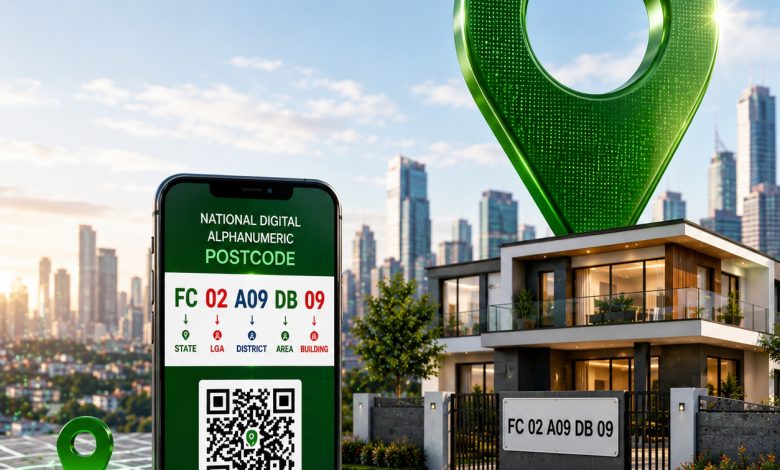
ABUJA, Nigeria: Nigeria is set to commence the rollout of a new National Digital Alphanumeric Postcode System on October 1, 2026, in a major move to modernise the country’s addressing infrastructure.
The new system is expected to gradually replace the existing six-digit postcode structure that has been in use for decades. Unlike the traditional system, the new digital alphanumeric approach is designed to provide individual buildings with unique, machine-readable location codes.
The development is aimed at tackling one of Nigeria’s longstanding infrastructure challenges: the difficulty of accurately identifying and locating residential properties, businesses, offices, public institutions and other facilities.
Why Nigeria is changing its postcode system
Nigeria’s current addressing structure has often presented challenges for postal operators, courier companies, businesses, emergency responders and government agencies.
In many parts of the country, properties may be identified using landmarks, informal descriptions, street names that are duplicated across different locations or addresses that are difficult to verify.
These challenges can result in delayed or failed deliveries and make it harder for organisations to provide services efficiently.
NIPOST has estimated that problems associated with addressing cost the Nigerian economy between N50 billion and N80 billion every year in missed and failed deliveries alone.
The proposed digital postcode system is intended to address some of these challenges by creating a more precise and standardised way of identifying locations.
More than just a postcode
The planned system is not being positioned simply as an upgrade to postal codes.
It is designed to function as a digital location layer that can potentially be used across different sectors of the economy.
Among the areas expected to benefit are:
- E-commerce: Online retailers and logistics companies could use precise location information to improve deliveries and reduce failed or returned orders.
- Banking and financial services: Banks and other financial institutions could use verified location information for customer identification, address verification and service delivery.
- Emergency response: Emergency services could potentially use precise location information to locate people and buildings more quickly during emergencies.
- Identity verification: Digital location information could support address verification as part of identity and customer verification processes.
- Government services: Public institutions could use standardised digital addresses when delivering services, planning infrastructure and maintaining records.
- Postal and courier services: Delivery companies could benefit from more accurate location data, potentially reducing delays and unsuccessful deliveries.
Potential impact on everyday Nigerians
For ordinary Nigerians, the biggest change could be the ability to provide a recognised digital location code instead of relying heavily on landmarks or lengthy directions when giving an address.
For example, rather than telling a delivery rider to locate a property by a nearby school, filling station or other landmark, the digital postcode could provide a standardised location reference that can be interpreted by digital systems.
This could be particularly useful as Nigeria’s e-commerce, fintech and digital-services sectors continue to expand.
Implications for businesses
Businesses that depend on deliveries, logistics, customer verification and physical locations could also benefit from the new addressing framework.
Accurate location data can help companies improve delivery planning, maintain customer records, verify addresses and reduce the operational costs associated with failed deliveries.
For small businesses and online vendors, a reliable digital address could also make it easier for customers and logistics companies to locate their premises.
A potential boost for emergency services
One of the potentially important applications of the new system is emergency response.
When people contact emergency services, accurately describing their location can sometimes be difficult, particularly in areas where streets and properties are poorly numbered or where landmarks are the main means of navigation.
A unique digital location identifier could provide emergency agencies with a standard reference for identifying a specific property, potentially improving response coordination.
Part of Nigeria’s wider digital transformation
The introduction of the National Digital Alphanumeric Postcode System comes as Nigeria continues to expand the use of digital identification, electronic payments, e-commerce and technology-driven public services.
A dependable national addressing database could provide an important piece of infrastructure for these services.
The system could also create opportunities for greater integration between location information and digital platforms used by businesses, government agencies and service providers.
October 1 rollout
The planned October 1, 2026 commencement represents an important milestone in Nigeria’s efforts to modernise its national addressing system.
However, the effectiveness of the new system will ultimately depend on how comprehensively locations are captured, how easily Nigerians can obtain and use their codes, and how widely businesses, government agencies and digital platforms adopt the system.
If successfully implemented, the new postcode system could go beyond helping Nigerians receive parcels. It could become a fundamental part of the country’s digital infrastructure, giving homes, businesses and public facilities a more reliable digital identity based on their physical location.