
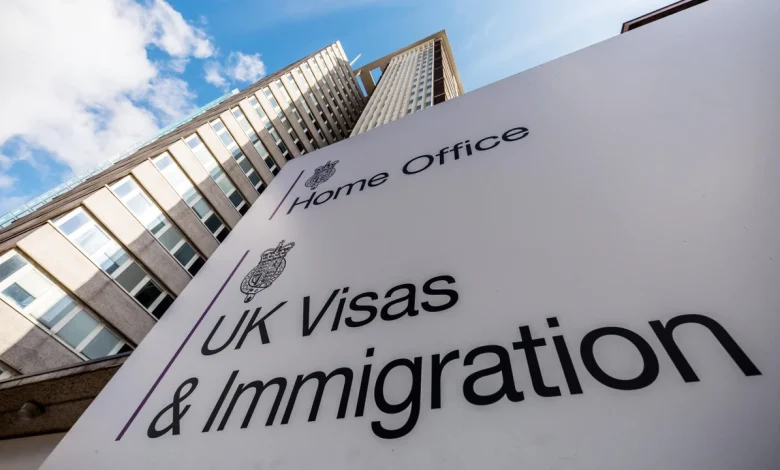
LONDON, UNITED KINGDOM — The UK Home Office has reiterated its position on the employment obligations of Skilled Worker visa holders, warning that migrants who fail to begin their sponsored jobs within the required timeframe could face immigration consequences.
The reminder follows growing discussions online about the “28-day rule,” a key requirement within the UK’s Skilled Worker sponsorship system that many visa holders may not fully understand.
Under current Home Office guidance, individuals granted permission to work in the United Kingdom through the Skilled Worker route are generally expected to commence employment within 28 days of the relevant start date associated with their sponsorship.
The rule forms part of the government’s wider efforts to ensure that work visas are issued for genuine employment opportunities and that sponsored workers take up the positions for which they were granted entry clearance.
Home Office Position
According to official guidance, employers holding a sponsorship licence are required to closely monitor the employment status of sponsored workers and report significant changes to the Home Office.
Where a Skilled Worker visa holder fails to start work within 28 days, the sponsoring employer must notify the Home Office and provide details explaining the delay.
The relevant date may be the start date recorded on the worker’s Certificate of Sponsorship (CoS), the date the visa becomes valid, the date the worker enters the United Kingdom, or the date they receive notification that their visa application has been approved.
The Home Office maintains that sponsorship arrangements must reflect genuine employment and that sponsored workers are expected to take up their roles within a reasonable period after receiving permission to work.
What Action Can the Home Office Take?
While some social media posts have suggested that workers automatically lose their visas after 28 days, immigration experts say this interpretation is inaccurate.
Instead, the Home Office assesses each case individually before deciding whether enforcement action is necessary.
Where no valid explanation is provided for the delay, officials may review the worker’s immigration status and take steps to curtail or cancel their permission to remain in the United Kingdom.
The Home Office may also investigate whether the sponsored role remains genuine and whether the conditions of sponsorship continue to be met by both the employer and employee.
In more serious cases, non-compliance could affect future immigration applications or lead to further scrutiny of the sponsoring organisation.
Legitimate Reasons for Delays
The Home Office acknowledges that there are circumstances in which delays may be unavoidable.
Acceptable reasons may include travel disruptions, medical emergencies, serious illness, bereavement, family emergencies, visa-related administrative issues, or contractual notice periods with a previous employer.
Where such circumstances exist, sponsors are expected to report the delay and provide supporting information to the Home Office.
Immigration specialists note that workers who maintain communication with their employers and provide evidence of genuine delays are far less likely to encounter difficulties with their immigration status.
Advice for Skilled Workers
Experts are advising migrant workers planning to relocate to the United Kingdom to familiarise themselves with the conditions attached to their visas before travelling.
Workers who anticipate any delay in commencing employment are encouraged to immediately inform their sponsoring employer and keep records of all correspondence relating to revised start dates.
Such documentation may prove valuable should questions arise regarding compliance with sponsorship requirements.
Why the Rule Matters
The Skilled Worker route remains one of the UK’s most important pathways for overseas talent, enabling employers across sectors, including healthcare, engineering, information technology, construction, logistics, education, and social care, to fill critical workforce gaps.
As the government continues to review immigration policies and strengthen sponsorship compliance measures, understanding obligations such as the 28-day employment requirement has become increasingly important for migrant workers seeking to build long-term careers in Britain.
For visa holders, the message from the Home Office is clear: while a delayed start date does not automatically result in visa cancellation, workers and sponsors must be able to demonstrate a legitimate reason for any delay or risk having their immigration status reviewed.