Scotland, Wales, Northern Ireland Leaders Push For Independence Votes
Leaders of the three devolved nations are set to sign a joint declaration calling for the right to hold independence referendums, putting fresh pressure on Westminster.

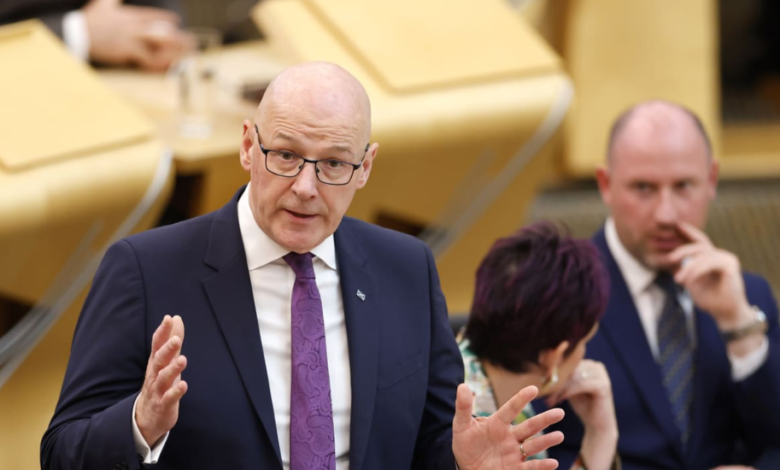
CARDIFF, UK — Political leaders from Scotland, Wales and Northern Ireland are preparing to make a joint push for greater self-determination and the right to hold independence referendums, in a move that could intensify the debate over the future of the United Kingdom.
Scottish First Minister and SNP leader John Swinney, Welsh First Minister and Plaid Cymru leader Rhun ap Iorwerth, and Northern Ireland First Minister Michelle O’Neill of Sinn Féin are expected to meet in Cardiff on Monday for a landmark political summit.
Sinn Féin president Mary Lou McDonald is also expected to attend.
The leaders are expected to sign a memorandum of understanding affirming their parties’ commitment to pursuing independence referendums and greater constitutional autonomy. The meeting is being viewed as an important moment for pro-independence movements across the UK.
The development comes after recent political changes strengthened pro-independence parties in the devolved nations. Plaid Cymru’s success in the 2026 Welsh election means all three devolved governments are now led by parties that support some form of independence or Irish reunification.
Scotland
For Scotland, the issue centres on the SNP’s long-running demand for a second independence referendum.
Scotland voted against independence in 2014, with 55% voting to remain in the United Kingdom. The Scottish independence debate, however, has remained politically significant, with the SNP continuing to argue that Scotland should have another opportunity to decide its constitutional future.
Recent comments by UK Prime Minister Andy Burnham suggesting that a future Scottish referendum could be considered if there is clear majority support have added fresh momentum to the debate.
Wales
Wales has traditionally seen weaker support for independence than Scotland, but the issue has gained greater political attention following Plaid Cymru’s breakthrough in the 2026 election.
Welsh First Minister Rhun ap Iorwerth has stressed that Wales should be treated as a nation rather than simply as a region of England. He has also called for further powers to be devolved to Wales, including control over policing and justice.
While independence remains a longer-term possibility, ap Iorwerth has said his immediate objective is to strengthen Wales and secure greater powers for the Welsh government.
Northern Ireland
Northern Ireland’s constitutional question is different because its future status is already addressed under the 1998 Good Friday Agreement.
The agreement provides a mechanism for a border poll if it appears likely that a majority of voters would support Northern Ireland leaving the United Kingdom and joining a united Ireland.
The issue has received additional international attention after US President Donald Trump recently expressed support for Irish reunification during his visit to Ireland. The UK government, however, has maintained that there is currently insufficient public support to justify holding a border poll.
Could the UK actually break up?
The joint declaration would not automatically trigger independence referendums or dissolve the United Kingdom.
Instead, it represents a coordinated political demand for the right to hold votes on constitutional status.
The move nevertheless marks a significant development because Scotland, Wales and Northern Ireland are increasingly discussing constitutional change together rather than as separate political questions.
Recent polling cited in UK media indicates varying levels of support for independence or constitutional change across the three nations, with Scotland showing the strongest support among the three.
For Westminster, the coordinated campaign presents a new constitutional challenge at a time when debates over devolution, regional powers and the future structure of the UK are already intensifying.
The Cardiff meeting on Monday could therefore become an important moment in the growing debate over whether the United Kingdom should remain a single political union or move towards a fundamentally different constitutional arrangement.