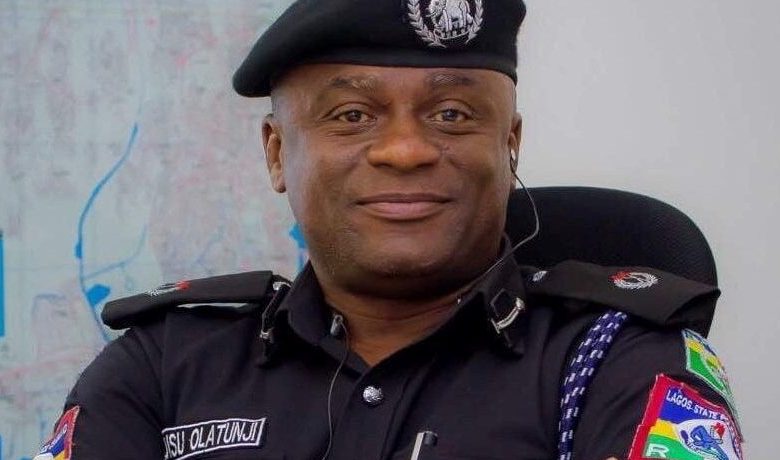
The Inspector General of Police, Kayode Egbetokun, has been removed from office by President Bola Ahmed Tinubu, with senior police sources confirming that Assistant Inspector General of Police Tunji Disu will replace him.
Disu, who until now headed the Force Criminal Investigation Department (FCID) Annex in Alagbon, Lagos, is expected to take over as the new Inspector General following a handover process that reportedly began after Egbetokun visited the Presidential Villa.
According to insider accounts, Egbetokun was summoned to the Villa on Monday, where he was instructed to prepare his handover notes — a clear sign that his tenure was over. By Tuesday, multiple senior officers and officials within the Police Service Commission were already speaking of his removal as a done deal.

“Too many scandals” and health worries
Behind the scenes, sources say a mix of public scandal, internal discontent and health concerns drove the decision.
One senior source described Egbetokun as “incompetent” and “power-drunk,” claiming that the controversies around him had become too heavy for the administration to ignore. Another said the President wanted him to step aside and “focus on getting treatment,” referencing reported kidney-related medical issues.
Despite resistance from some quarters, including alleged support from First Lady Remi Tinubu, insiders say the President was firm on his decision to let Egbetokun go. At police formations, news of his removal was met with quiet celebrations, as some officers reportedly rejoiced at what they saw as the end of a troubled era.
Tenure extension, rule-bending and public backlash
Egbetokun’s time as IGP was plagued by controversy almost from the start.
One of the biggest flashpoints was his prolonged stay in office beyond the mandatory retirement benchmark of 60 years of age or 35 years in service. Civil society groups and critics argued that the extension violated police service rules, feeding accusations of favouritism and a growing culture of impunity within the system.
For many observers, this clash over retirement rules became symbolic — a test of whether institutions and regulations still meant anything when weighed against politics and personal influence.
The Bukola Kuti promotions scandal
Another major storm centred on Bukola Yemisi Kuti, a Principal Staff Officer in Egbetokun’s office.
SaharaReporters had previously published detailed reports alleging that Kuti enjoyed unusually rapid promotions under questionable circumstances, with critics claiming that her closeness to the IGP gave her undue advantage.
Sources quoted in those reports went even further, alleging that Kuti was not just a staff officer but also Egbetokun’s mistress — a claim that supercharged the scandal and deepened perceptions of nepotism and abuse of office at the top of the police hierarchy.
₦100 million, a governor’s security vote and the IGP’s son
The controversies didn’t stop there.
SaharaReporters also reported that about ₦100 million from Anambra State’s security vote was allegedly traced to the bank account of Victor, the son of Kayode Egbetokun. The allegation suggested that funds meant for state security operations may have been diverted for personal benefit, igniting public outrage and fresh demands for an independent investigation.
Instead of moving quickly to clear the air through transparent probes, police authorities were accused of using institutional power to chase down those reporting the story. Legal actions were launched against journalists and platforms that published the allegations, further fuelling suspicion that the leadership was more interested in silencing critics than answering questions.
Courts, gag orders and the war with critics
During Egbetokun’s tenure, his office repeatedly made headlines — not for policing breakthroughs, but for courtroom battles.
He filed multiple charges against activist and publisher Omoyele Sowore after Sowore publicly described him as an “illegal IGP” — a reference to the dispute over his tenure extension. Lawsuits and injunctions followed, with the Federal High Court issuing orders restricting further publications about Egbetokun and his family.
When more reports emerged about alleged promotions and financial irregularities involving his son Victor and Bukola Kuti, Egbetokun’s camp responded with fresh rounds of litigation. Court orders were obtained to restrain Sowore and SaharaReporters from publishing further stories on the trio.
To many observers, this pattern painted the picture of an embattled police chief leaning heavily on state power and the court system to shield his image, while avoiding open, independent investigations into the core allegations.
A controversial chapter closes, a new one begins
Egbetokun’s removal, coming after months of accumulating scandals and rising internal resentment, marks the end of one of the most contentious tenures in recent police history.
For critics, his exit is long overdue — a necessary step toward restoring some measure of credibility to the leadership of the Nigeria Police Force. For others, it is a reminder of how fragile public trust can be when those who are meant to enforce the law become the focus of serial controversy.
As Tunji Disu steps into the role, he inherits not just a uniform and a title, but a battered institution in urgent need of reform, transparency and renewed trust.