
Escalation in Middle East: U.S. Launches Fresh Strikes on Iran for Second Time in Three Days

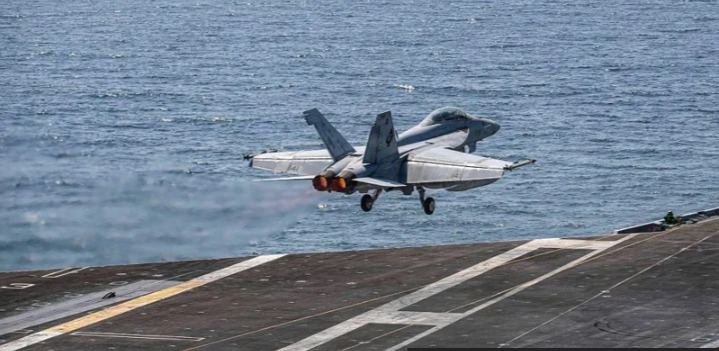
U.S. forces have carried out another round of military strikes on Iran, hitting a strategic site in the southern port city of Bandar Abbas, in what marks the second such operation within just three days amid rising tensions and a fragile ceasefire in the region.
The latest action, confirmed by U.S. Central Command (Centcom) on Thursday, May 28, 2026, targeted what officials described as a military facility preparing to launch a drone attack near the critical Strait of Hormuz. According to Centcom, American forces also intercepted and destroyed four Iranian one-way attack drones that were deemed an immediate threat to international shipping lanes in the area.
Military officials said the Bandar Abbas site was struck moments before it could deploy a fifth drone. Iranian state-linked media reported explosions in the eastern part of the city shortly after the incident.
The renewed strikes come at a volatile moment, as Washington and Tehran continue uneasy negotiations aimed at ending a months-long conflict that has already disrupted global oil and gas supply routes. The Strait of Hormuz, one of the world’s most important energy corridors, has been severely impacted by ongoing hostilities.
Centcom described the operation as “measured, purely defensive, and intended to maintain the ceasefire,” insisting the strikes were carried out strictly in self-defence. This follows U.S. attacks earlier in the week, including operations on Monday, May 25, 2026, which targeted Iranian missile installations and naval units accused of attempting to deploy mines in the Strait.
Iran, however, strongly condemned the latest strikes, calling them a “grave violation of the ceasefire” and warning that it would not leave any act of aggression unanswered. The confrontation has further strained already fragile diplomatic efforts between both nations.
Tensions have also widened beyond Iran, with Kuwait reporting that its air defence systems intercepted “hostile missile and drone threats” on Thursday, though officials provided limited details.
Meanwhile, Washington has intensified economic pressure alongside military action. The U.S. Treasury imposed new sanctions on the so-called “Persian Gulf Strait Authority,” an Iranian body responsible for managing shipping payments through the Strait of Hormuz. Officials warned that any vessel dealing with the agency could face punitive measures.
The Strait remains a critical global trade route, with nearly one-fifth of the world’s oil and liquefied natural gas passing through it. Disruptions there have already sent shockwaves through global energy markets.
Iranian officials insist the fees collected are legitimate charges for maritime services, while U.S. Treasury Secretary, Scott Bessent, accused Tehran of attempting to “extort global maritime trade.”
The crisis has unfolded alongside conflicting political signals from Washington. U.S. President, Donald Trump, has alternated between warning of renewed large-scale military action and suggesting that a deal with Iran is still possible, though he admitted the U.S. is “not satisfied” with the current state of negotiations.
Despite reports of progress in recent diplomatic discussions, both sides have acknowledged that no final agreement has been reached. The White House has dismissed Iranian claims of a near-final draft deal as “a complete fabrication.”
As military activity continues and diplomacy stalls, fears are growing that the fragile ceasefire could collapse entirely, potentially dragging the region into a wider conflict with global economic consequences.