After over a year of investigation, the Federal Government has released the findings of an independent panel set up to examine misconduct and drive reforms within the Nigerian Correctional Service.
The report was presented during a stakeholders’ meeting organised by the Federal Ministry of Interior, with participants drawn from across the justice sector, security agencies, civil society groups, and international partners.
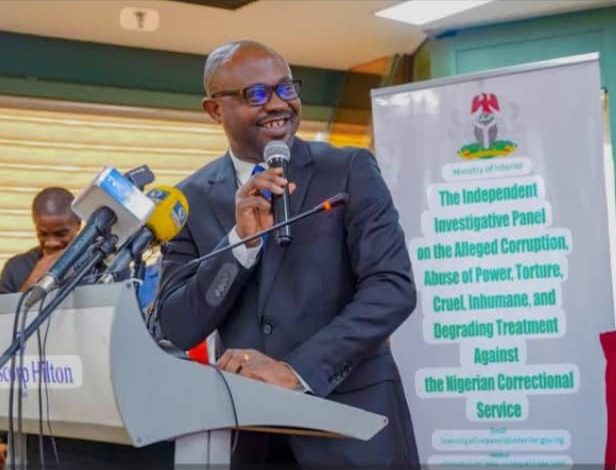
Speaking at the event, Interior Minister Olubunmi Tunji-Ojo said the panel was created to take a hard, honest look at the issues affecting the correctional system and chart a clear path for reform.
“This process is about building a system rooted in transparency, accountability, and integrity. We chose to face these challenges head-on because they present an opportunity to fix what’s broken,” he said.
The panel, which was inaugurated in November 2024, spent 16 months carrying out investigations, consultations, and detailed analysis. Its work was triggered by allegations ranging from corruption and abuse of office to violations of inmates’ rights across correctional facilities.
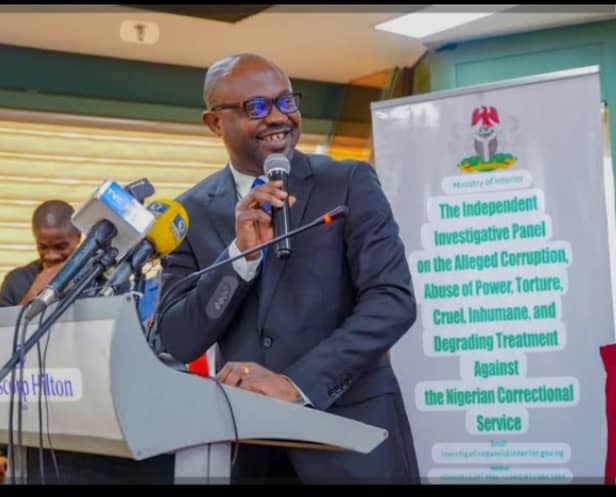
Tunji-Ojo emphasised that correctional centres must evolve beyond just detention facilities, shifting focus towards rehabilitation, reintegration, and meaningful societal impact. He added that the report would guide major reforms, including better welfare for personnel and improved service delivery.
Also addressing the gathering, the Attorney-General of the Federation, Lateef Fagbemi, described the report as a crucial step toward strengthening accountability in Nigeria’s justice system. He noted that it would help restore public confidence while reinforcing human rights protections through bodies like the National Human Rights Commission.
Fagbemi further pointed to the Nigerian Correctional Service Act 2019 as a turning point, shifting the system from punishment-focused to one centred on rehabilitation and respect for human dignity.
Chairperson of the panel and Permanent Secretary of the ministry, Magdalene Ajani, said the process reflected the government’s commitment to openness and meaningful reform.
“The panel operated with fairness, independence, and a clear focus on the public interest,” she said, noting that stakeholder input remains key to shaping the reform agenda.
Representatives from groups such as the Nigerian Bar Association and UNICEF called for urgent implementation of the recommendations.
They highlighted ongoing challenges, including overcrowded facilities, long pre-trial detentions, and gaps in enforcing existing laws. Calls were also made for wider use of non-custodial sentencing, improved access to justice, stronger protections for vulnerable inmates, and better welfare for correctional staff.
The minister urged all stakeholders to back the reform process, stressing that real change will depend on collective action and a firm commitment to the rule of law.