
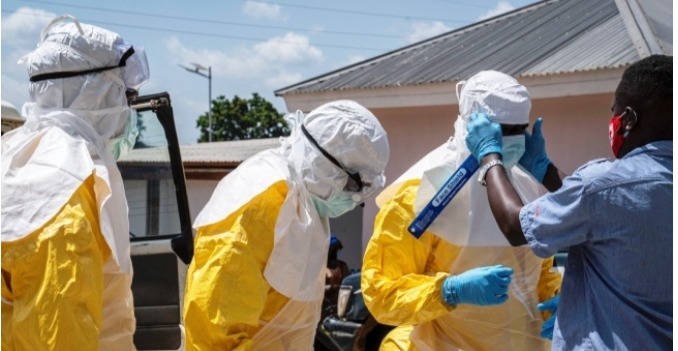
The Federal Government is weighing the introduction of flight restrictions from countries affected by the Ebola virus, alongside possible isolation measures for incoming passengers showing symptoms, as authorities step up efforts to prevent the disease from entering Nigeria.
The move followed a high-level emergency meeting held on Thursday in Victoria Island, Lagos State, led by the Chief of Staff to the President, Femi Gbajabiamila, to review Nigeria’s preparedness and response plan against a potential Ebola outbreak.
Gbajabiamila disclosed that the proposed measures would include limiting air travel from high-risk countries and isolating suspected cases detected at points of entry.
The meeting had in attendance top health and security officials, including the Director-General of the Nigeria Centre for Disease Control and Prevention, Dr. Jide Idris; Minister of Interior, Olubunmi Tunji-Ojo; and Lagos State Commissioner for Health, Prof. Akin Abayomi, among others.
He said President Bola Tinubu had already been briefed on the Ebola situation in the Democratic Republic of Congo (DRC) and Uganda, stressing that Nigeria would take all necessary precautions to avoid any outbreak.
According to him, the government is considering multiple response options, including tighter screening at airports, possible flight restrictions, and isolating passengers arriving from affected regions.
Gbajabiamila noted that the administration is prioritising prevention, warning that no chance would be taken given past experiences with infectious disease outbreaks.
“We have a health scare, which is Ebola… we don’t want to leave anything to chance,” he said, adding that protocols are being strengthened at all entry points.
Minister of Interior, Olubunmi Tunji-Ojo, said all Nigerian ports of entry will be placed under strict surveillance, while the Nigeria Immigration Service will work closely with the NCDC to improve early detection and response.
On his part, NCDC Director-General, Dr. Jide Idris, warned that Ebola remains a highly dangerous disease with no widely available cure or vaccine, stressing the need for sustained vigilance, especially among frontline health workers.
He confirmed that preparedness plans have been activated across all 36 states, alongside intensified public awareness campaigns.
The World Health Organisation said it has recorded 10 confirmed and 223 suspected Ebola deaths in the DRC since the outbreak was declared in mid-May, out of more than 1,000 suspected and confirmed cases.
WHO Director-General, Dr. Tedros Adhanom Ghebreyesus, has warned that ongoing insecurity in eastern DRC is making containment efforts increasingly difficult.
Health authorities say Nigeria’s response strategy will focus on surveillance, rapid detection, isolation, and public enlightenment as key tools to prevent any possible spread.