
Nigeria’s School Kidnapping Crisis Sparks National Debate
As fresh school abductions reignite national outrage, Nigerians at home and abroad are questioning leadership, demanding action, and drawing comparisons with past responses to similar tragedies ahead of the 2027 elections.

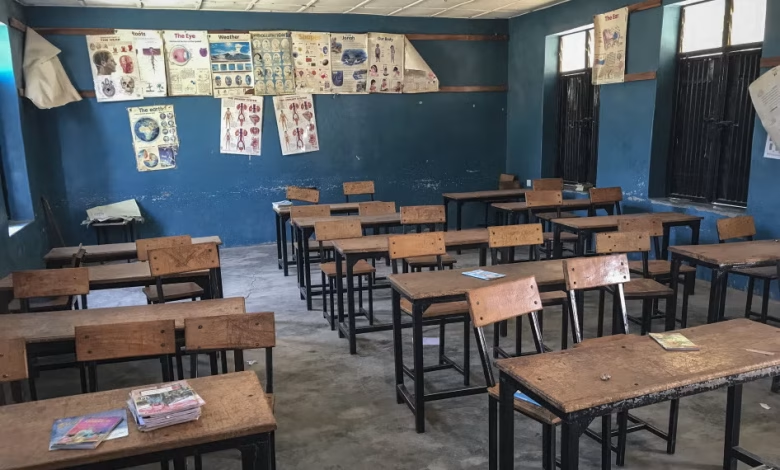
As Nigeria grapples with fresh reports of school kidnappings and the continued captivity of children taken from their families, public frustration is reaching a boiling point. What began as another security incident has evolved into a national conversation about leadership, empathy, accountability, and the future of the country as political attention slowly shifts toward the 2027 general elections.
For many Nigerians, the latest wave of school abductions is more than a security crisis. It is a painful reminder of a tragedy the nation has witnessed before, one that many believed should never have been repeated.
A Nation Haunted by Familiar Memories
The kidnapping of schoolchildren remains one of the most emotionally charged issues in Nigeria’s modern history.
The 2014 abduction of the Chibok schoolgirls under the administration of former President Goodluck Jonathan shocked the world and triggered the global #BringBackOurGirls campaign.
More than a decade later, Nigerians are once again confronted with disturbing images and reports of children being taken from schools and communities by armed groups.
Parents are worried. Communities are frightened. Citizens are asking difficult questions.
How did Nigeria return to this point?
Why are children still being targeted?
And what lessons, if any, were learned from previous tragedies?
Public Anger Continues to Grow
Across social media platforms, radio stations, television discussions, community gatherings, and diaspora forums, one message has remained consistent: Nigerians want action.
Many citizens believe the country has spent years discussing insecurity without delivering enough long-term solutions.
The demands being made are clear:
- Immediate rescue of abducted children.
- Improved intelligence gathering.
- Better protection for schools.
- Stronger military and security operations.
- Accountability from security agencies.
- Long-term reforms aimed at preventing future attacks.
For many Nigerians, every new kidnapping feels like evidence that previous promises have not translated into lasting security improvements.
The Diaspora Is Watching Closely
The latest developments have also generated strong reactions among Nigerians living abroad.
From London to Toronto, Houston to Berlin, diaspora communities have expressed concern that school kidnappings continue to dominate headlines years after the Chibok crisis brought international attention to the issue.
Many diaspora Nigerians have voiced fears that ongoing insecurity damages Nigeria’s international image, affects investor confidence, and discourages tourism and development.
Others worry about the emotional impact on families back home and the message being sent to future generations about the safety of education in Nigeria.
For many abroad, the recurring nature of these incidents raises difficult questions about whether enough progress has been made over the past decade.
The First Lady Comparison Nigerians Are Talking About
Perhaps one of the most surprising discussions emerging from the latest crisis is not centred on politicians or security agencies, but on the role of Nigeria’s First Lady.
Many Nigerians have begun comparing the public response of former First Lady Patience Jonathan during the Chibok crisis with that of current First Lady Oluremi Tinubu.
During the Chibok schoolgirls’ abduction, Patience Jonathan became one of the most visible figures associated with the national response.
She met with parents, activists, government officials, and stakeholders involved in efforts surrounding the missing girls. During several public appearances, she was visibly emotional and openly expressed her distress over the situation.
At the time, many Nigerians criticised her approach. She was mocked on social media, ridiculed in political circles, and became the subject of countless jokes and internet memes.
Yet years later, some Nigerians are looking back at those moments differently.
Many citizens now argue that while her words and actions may have been controversial, she demonstrated empathy and emotional connection with grieving families. To them, she appeared not just as a political figure but as a mother reacting to the pain of other mothers.
Today, critics of the current administration point to what they describe as the absence of a similarly visible emotional response from the First Lady regarding recent school kidnapping incidents.
Across social media, some Nigerians have questioned why they have not heard stronger public statements or seen high-profile engagements focused specifically on the plight of the abducted children.
For these critics, the issue is not about constitutional responsibility or political authority. Instead, they argue that moments of national tragedy often require symbolic leadership, compassion, and visible solidarity with victims.
Others disagree with this criticism, noting that public appearances do not necessarily reflect the full extent of private efforts being undertaken behind the scenes.
Nevertheless, the debate reveals something deeper about public expectations. Nigerians increasingly want leaders and public figures who not only govern but also connect emotionally with the people they serve.
Tinubu’s Administration Under Increasing Pressure
As the crisis continues, pressure is mounting on the administration of President Bola Ahmed Tinubu.
Security was already one of the most significant concerns facing the government. Rising concerns over kidnappings, banditry, terrorism, and violent crime have made security a central issue in national conversations.
Every new incident increases the demand for measurable results.
Citizens want more than assurances. They want evidence that the situation is improving.
The government now faces the challenge of balancing immediate rescue operations with long-term security reforms that can prevent similar tragedies in the future.
How This Differs From the Jonathan Era
Although comparisons between the Tinubu and Jonathan administrations are becoming increasingly common, the security landscape has evolved considerably.
During Jonathan’s presidency, public attention was largely focused on Boko Haram and the insurgency in the North-East.
Today, Nigeria faces multiple overlapping threats, including terrorism, banditry, organised kidnapping networks, communal conflicts, and other forms of criminal violence.
Social media has also transformed public discourse.
Unlike 2014, information now travels instantly. Citizens can organise campaigns, share information, mobilise support, and criticise leaders in real time.
This means every government response is scrutinised more intensely than ever before.
What This Could Mean for the 2027 Elections
Political analysts believe insecurity may become one of the defining issues of the 2027 election cycle.
As campaigns begin to take shape over the coming months and years, opposition parties are likely to point to security challenges as evidence that current strategies need improvement.
Several factors could influence voter behaviour:
Security Could Become the Top Election Issue
Many voters may prioritise candidates who present credible plans to tackle insecurity.
Youth Voters Could Play a Bigger Role
Nigeria’s younger generation is highly active online and increasingly engaged in political discussions. Issues affecting children, education, and national security resonate strongly among this demographic.
Public Trust May Be Tested
If insecurity remains unresolved, confidence in political institutions could face additional strain.
Leadership Style Could Matter More
Beyond policy proposals, voters may also evaluate leaders based on empathy, communication, and their ability to connect with citizens during difficult moments.
Looking Ahead
The coming weeks and months will be crucial.
Successful rescue efforts could restore confidence and ease public concerns. Failure to secure the release of abducted children, however, could deepen frustration and intensify political pressure.
What is clear is that Nigeria has reached another defining moment.
The latest school kidnapping crisis is not simply about security statistics or political debates. It is about children, families, communities, and a nation struggling to protect its future.
As 2027 approaches, Nigerians will be watching closely not only for policy solutions but also for signs of leadership, accountability, compassion, and decisive action.
For many citizens, the question is no longer whether insecurity is a problem. The question is whether those entrusted with leadership can finally provide the answers Nigerians have been waiting for.