A dream Antarctic voyage has turned into a public health emergency off the coast of West Africa this week, with 150 passengers stranded aboard the Dutch-flagged MV Hondius after a suspected hantavirus outbreak.
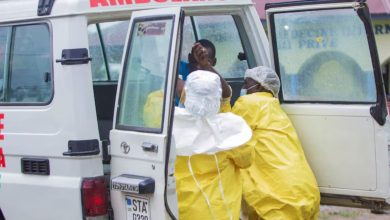
Medical teams acted on Monday, May 4, to evacuate two crew members exhibiting symptoms of the deadly virus. The ship, which primarily carries British, American, and Spanish passengers, has been denied permission to dock in Cape Verde as a precautionary measure.
Three individuals have already died: a Dutch couple and a German national. A British passenger who was evacuated earlier is currently receiving treatment in South Africa.
“We’re not just headlines. We are people with families, lives, and loved ones waiting for us at home,” said Jake Rosmarin, a U.S. travel blogger, in an emotional Instagram video from the ship on Monday, May 4. “There is a lot of uncertainty, and that is the hardest part.”
The World Health Organisation (WHO) has stated that the risk to the general public is low. Hantavirus is rare and is typically spread through airborne rodent droppings and urine; it does not easily transmit between humans.
“There is no need for panic or travel restrictions,” said Hans Kluge, WHO Europe director. Cape Verdean authorities denied the ship permission to dock to “protect national public health.”
Operator Oceanwide Expeditions is working to screen passengers and arrange disembarkation in Las Palmas and Tenerife. Plans are also in motion to repatriate two symptomatic crew members—one British and one Dutch—along with the body of the German national and another guest linked to the deceased.
The MV Hondius departed from Ushuaia, Argentina, in March for a high-end Antarctic expedition, with cabin prices ranging from €14,000 to €22,000. Its itinerary included Antarctica, the Falkland Islands, South Georgia, and several remote Atlantic islands before it entered Cape Verdean waters on Sunday, May 3.
South Africa’s Health Department confirmed that the Dutch victims were a 70-year-old man who died on St. Helena and his 69-year-old wife, who died after collapsing at OR Tambo International Airport in Johannesburg. A lab test confirmed hantavirus in the British patient who was treated at a clinic in Johannesburg.
The source of the outbreak remains unknown. “You could imagine that rats on board transmitted the virus,” said a spokesperson for the Netherlands’ RIVM. “However, it is also possible that people were infected during a stop in South America. That still needs to be investigated.” No specific treatment exists for hantavirus; severe cases require supportive care, including ventilators. Symptoms typically begin as flu-like fatigue and fever, one to eight weeks after exposure.
For now, 150 people remain at sea, uncertain, anxious, and far from home.