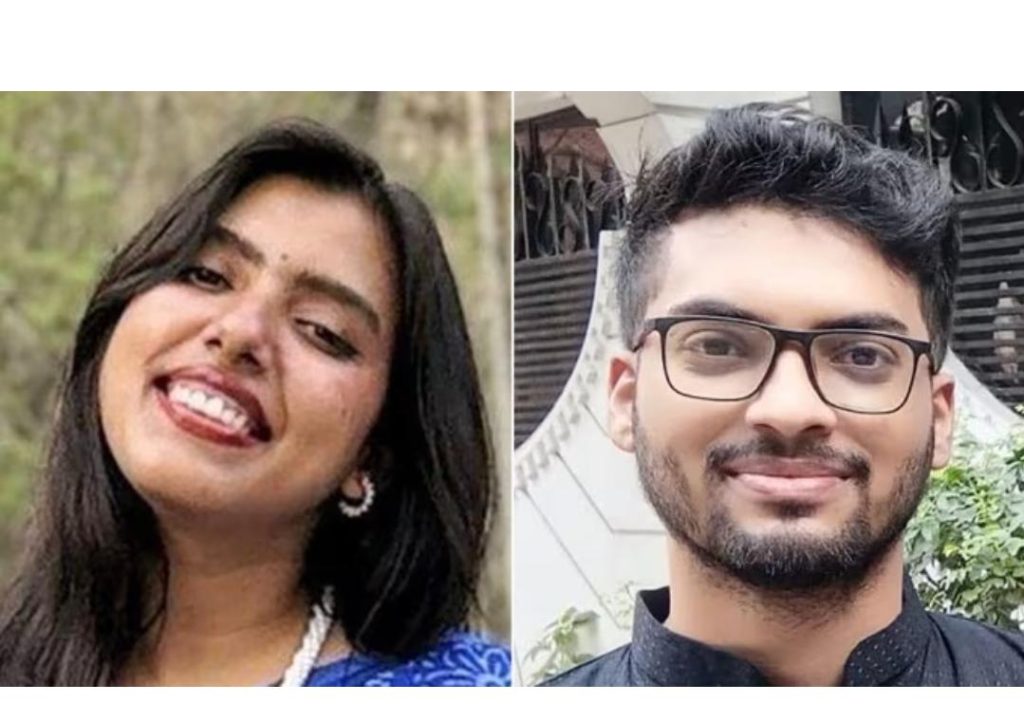
Credit: Nahida Bristy/ family of zamil / CNN.
Court filings from prosecutors now detail how detectives tracked the killings of two University of South Florida doctoral candidates, from the moment they vanished to the recovery of their remains.
Zamil Limon and Nahida Bristy, both 27 and from Bangladesh, disappeared in mid-April. Limon’s body was located on April 24. Investigators believe Bristy was also killed, with remains discovered April 26. Both cases are classified as homicides.
Hisham Abugharbieh, 26, who shared an apartment with Limon, has been charged with two counts of first-degree premeditated murder with a weapon. A judge ordered him held without bond pending trial.
When Friends and Family Alerted Authorities
According to the state’s pretrial motion, Limon and Bristy last communicated with friends on April 16, 2026. Bristy failed to attend a scheduled meeting that evening to pick up her eyeglasses and stopped responding to messages.
Data from Limon’s phone placed him near his residence and the USF campus before traveling toward Clearwater around 7:43 p.m. that same day.
Both students were formally reported missing on April 17. When officers checked Bristy’s office on campus the following day, they found her lunchbox, MacBook, and iPad still at her desk.
How Investigators Located the Victims
Zamil Limon: On April 24, detectives combing the Howard Frankland Bridge area found a black trash bag at a spot linked to Abugharbieh’s phone data from the early hours of April 17. Prosecutors said the bag resembled others discovered under the suspect’s bed. The remains inside were confirmed as Limon’s.
An autopsy reported multiple sharp force injuries. One stab wound to his lower back reached his liver.
Nahida Bristy: Two days later, a second black trash bag appeared on the shoreline south of the first site. It was tied identically to the bag holding Limon. The body inside was badly decomposed but wore clothes matching Bristy’s last known outfit from campus security footage. She had also suffered multiple stab wounds. Official identification is still underway.
Key Evidence and How It Was Collected
Dumpster Evidence: After a roommate told police he saw Abugharbieh wheeling cardboard boxes to a compactor dumpster late on April 16, investigators searched it on April 23. They pulled out a bloodied floor mat, Limon’s wallet, Bristy’s phone case, Limon’s glasses, and stained clothing.
Vehicle and Location Tracking: Traffic cameras captured Abugharbieh’s white Hyundai Genesis G80 in Clearwater within 10 minutes of Limon’s phone signal on April 16. Phone records showed their devices moving together that night. Abugharbieh consented to a car search. The vehicle looked freshly cleaned and had no recoverable data.
Online Activity: Prosecutors pointed to Amazon orders on April 7 and 11 for duct tape, trash bags, fire starter, and lighter fuel. A DoorDash order from Abugharbieh’s phone on April 16 brought trash bags, Lysol wipes, and Febreze to his door.
The court filing also cited ChatGPT queries. On April 13, Abugharbieh asked what happens if a person is placed in a black garbage bag and left in a dumpster. On April 23, he searched the meaning of “missing endangered adult” and whether vehicles are checked at Hillsborough River State Park.
Injuries and Inconsistent Statements: Detectives observed a bandaged left pinky, a new cut on his tricep, and lacerations on both legs during interviews. He said the finger injury came from slicing onions. His timeline of when he last saw Limon and Bristy changed multiple times.
Waterway Search: After the victims were classified as “endangered” on April 23, the Hillsborough County Sheriff’s Office sent Marine and Dive units to search near the Howard Frankland Bridge.
Where the Case Stands
Abugharbieh was taken into custody April 24 at a Lutz residence following a domestic disturbance call. Beyond murder, he faces counts for moving a body, failing to report a death, evidence tampering, false imprisonment, and battery.
A judge denied bond on April 28. No arraignment date has been set.
Florida’s Attorney General has broadened an inquiry into OpenAI to include this case, citing the ChatGPT searches. OpenAI stated it is cooperating with law enforcement.
The Hillsborough County Public Defender’s Office confirmed it represents Abugharbieh but would not comment further.