
UK Visa Ban Threat: Nigeria And Others Targeted In Reparations Row.

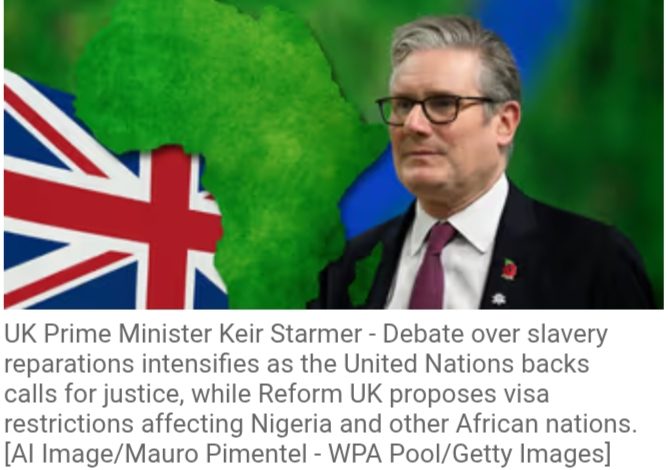
Fresh tensions are brewing between Britain and several African and Caribbean nations after a controversial proposal suggested tougher entry restrictions for citizens of countries demanding slavery reparations.
Under the plan put forward by Reform UK, nations that have formally called on United Kingdom to pay compensation for its role in the transatlantic slave trade could face stricter visa policies. Countries mentioned include Nigeria and Jamaica, along with several others across Africa and the Caribbean.
The proposal was outlined by the party’s home affairs spokesperson, Zia Yusuf, who argued that demands for reparations ignore Britain’s historical role in ending the slave trade. According to him, more countries are now pressing London for financial compensation despite what he described as the country’s “significant sacrifices” in abolishing slavery.
Yusuf also pointed out that the countries raising the issue have collectively received about 3.8 million UK visas and roughly £6.6 billion in British foreign aid over the last 20 years — equivalent to around $8.3 billion today.
Beyond Nigeria and Jamaica, the proposal also names Kenya, Haiti, Guyana, Barbados, and The Bahamas. If implemented, the policy could affect millions of citizens from these nations who travel to the UK for work, study, or tourism.
The debate gained momentum following a recent resolution by the United Nations General Assembly, which urged former colonial powers to confront the long-term consequences of slavery. The resolution described the forced displacement and enslavement of Africans as one of history’s gravest crimes against humanity. Britain chose to abstain from the vote.
Reacting to the development, Nigel Farage, leader of Reform UK, dismissed calls for reparations outright. He insisted that the UN has no authority over British policy and rejected any suggestion that the UK should apologise or pay compensation for historical injustices.
The party has also pledged to drastically cut Britain’s foreign aid budget to £1 billion a year — roughly $1.25 billion — which would represent about a 90 percent reduction from current spending levels.
Despite the heated rhetoric, the official stance of the British government remains more cautious. A spokesperson for the Foreign, Commonwealth & Development Office acknowledged the lasting scars left by slavery but said the government’s position on reparations has not changed. Similarly, Keir Starmer, leader of the Labour Party, has ruled out both an apology and financial compensation, instead advocating a focus on present-day cooperation.
Calls for reparations have grown louder in recent years. Countries such as Ghana, along with regional bodies like the Caribbean Community and the African Union, have intensified campaigns for formal apologies, the return of looted artefacts, and broader forms of historical justice.
With more than 120 countries supporting the latest UN resolution, the issue is rapidly gaining global attention — setting the stage for a potentially heated clash between demands for historical accountability and modern diplomatic relations.