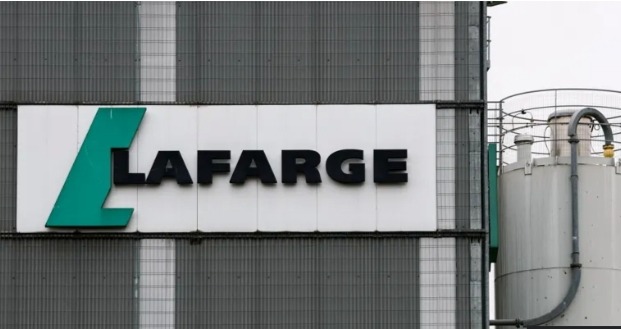
A major French cement company has been found guilty of secretly paying millions of dollars to extremist groups, including ISIS, to keep its business running during the Syrian civil war.
In a landmark ruling delivered in Paris, on Monday 13th April, 2026, a French court convicted Lafarge of financing militant organisations operating in Syria. The court said the company made payments to jihadist groups, including Islamic State, to ensure its cement plant in northern Syria continued operating despite the intensifying conflict.
The case marks the first time a corporation in France has been prosecuted and convicted for financing terrorism.
*Millions Paid to Armed Groups*
According to prosecutors, the company transferred about $6.5 million between 2013 and 2014 to several armed factions controlling territory near its cement factory in Jalabiya, northern Syria.
The payments were allegedly made to guarantee safe passage for workers, allow the movement of materials, and keep production running even as extremist groups tightened their grip on the region.
Judge Isabelle Prévost-Desprez said the court concluded the company knowingly entered into what amounted to a “commercial partnership” with extremist organisations.
“The sole objective of these payments was to keep the plant operating for economic gain,” the judge said, noting that the funds ultimately strengthened militant groups and helped them exploit local resources.
*Executives Sentenced*
The court also convicted several former executives of the company.
Among them was former Chief Executive, Bruno Lafont, who was sentenced to six years in prison for his role in the scandal.
Former Deputy Managing Director, Christian Herrault received a five-year jail term, while a former Syrian staff member, Firas Tlass, was sentenced in absentia to seven years in prison for facilitating payments to the armed groups.
Prosecutors said part of the money included payments of €800,000 for safe passage and about €1.6 million to buy raw materials from quarries controlled by militants.
The court also heard that another extremist faction, Al-Nusra Front, was among the groups that received money from the company.
*The Syrian Factory at the Centre of the Case*
The cement plant in Jalabiya had been purchased by Lafarge in 2008 for roughly $680 million and began operations in 2010, just months before Syria descended into civil war in 2011.
As the conflict escalated and militant groups captured large parts of the country, the company chose to continue operating the plant rather than shut it down.
Prosecutors argued that this decision led executives to strike illegal arrangements with militant groups to maintain production.
Some company officials defended the move, saying they were trying to protect local employees and avoid abandoning the facility during the chaos.
*Heavy Fine and Ongoing Investigations*
In addition to prison sentences for former executives, the company itself was fined more than €1 million.
The firm is now part of Swiss building materials giant Holcim, which acquired Lafarge following a merger in 2015.
However, legal troubles are far from over. French authorities are still investigating the company over possible complicity in crimes against humanity connected to the Syrian conflict.
The ruling follows a separate case in the United States in 2022, when Lafarge admitted to supporting militant groups and agreed to pay $777.8 million in penalties.
*A War That Enabled Extremist Control*
The Syrian civil war began in 2011 after protests against then-president, Bashar al‑Assad, were violently suppressed.
During the height of the conflict in 2014, ISIS seized vast territories across Syria and Iraq, declaring a so-called “caliphate” and enforcing an extreme version of Islamic law.
The court said Lafarge’s payments during this period helped militant organisations gain control of key resources and continue operations across the region.
The case has now become one of the most controversial examples of how multinational corporations operated in war zones – and the consequences when profit collides with global security.