
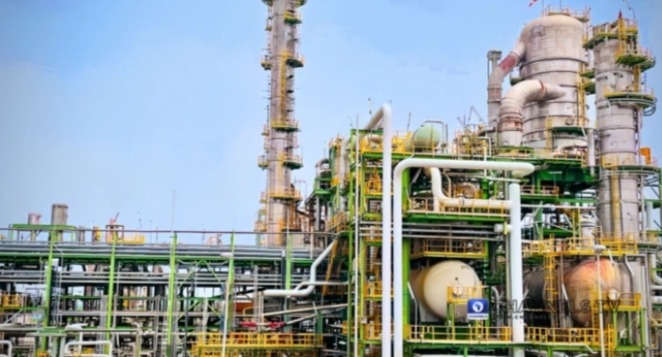
Reports circulating across business and energy circles claim that Nigerian industrial heavyweight Aliko Dangote is considering a bold $40 billion expansion strategy across Africa, potentially including a massive 650,000 barrels-per-day refinery project in East Africa.
The alleged plan, which has not been officially confirmed by Dangote Group or government authorities, is said to be part of a long-term industrialisation push running toward 2030. According to the reports, the initiative was discussed at a high-level economic summit in Nairobi involving regional leaders and investors.
Among those referenced in the discussions are Kenyan President William Ruto and Ugandan President Yoweri Museveni, with suggestions that government backing would be crucial for any refinery project of this scale to proceed.
If realised, the proposed facility would mirror the capacity of Dangote’s flagship refinery in Lagos, which is already considered one of the largest single-train refineries in the world. The East African version would significantly boost regional fuel production and reduce reliance on imported refined petroleum products.
Proponents of the idea argue that Africa’s heavy dependence on fuel imports continues to drain foreign exchange reserves and limit job creation. Current estimates suggest that African nations collectively spend hundreds of billions of dollars annually on imports, including refined fuel, despite vast crude oil reserves across the continent.
The reports also highlight warnings from economic analysts that Africa could face a widening fuel supply gap in the coming decades if local refining capacity does not expand rapidly.
However, despite the attention generated by the claims, no official investment agreement, project timeline, or site selection has been publicly confirmed. Industry observers note that large-scale refinery projects require years of feasibility studies, financing structures, and regulatory approvals before construction can begin.
Still, the discussion underscores a growing push for African industrial self-reliance. Regional leaders have repeatedly emphasized the need to move from exporting raw materials to developing domestic processing capacity that retains value and creates employment.
If the proposal materialises, it could mark one of the most ambitious private-sector-led infrastructure expansions in Africa’s history. For now, however, it remains a developing and unverified report awaiting official confirmation.