
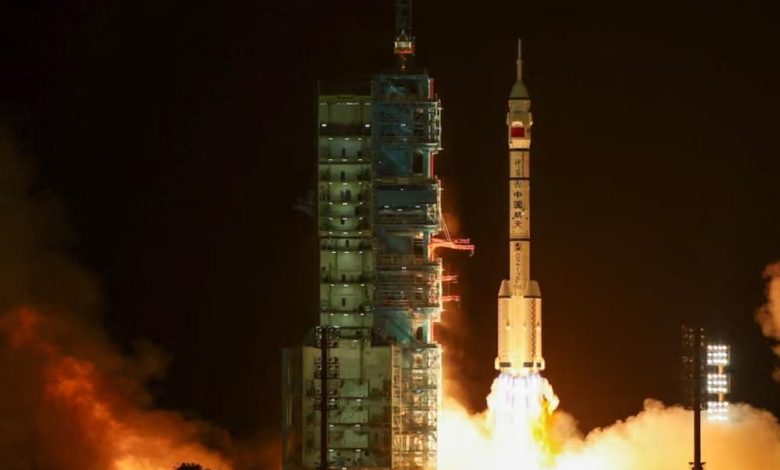
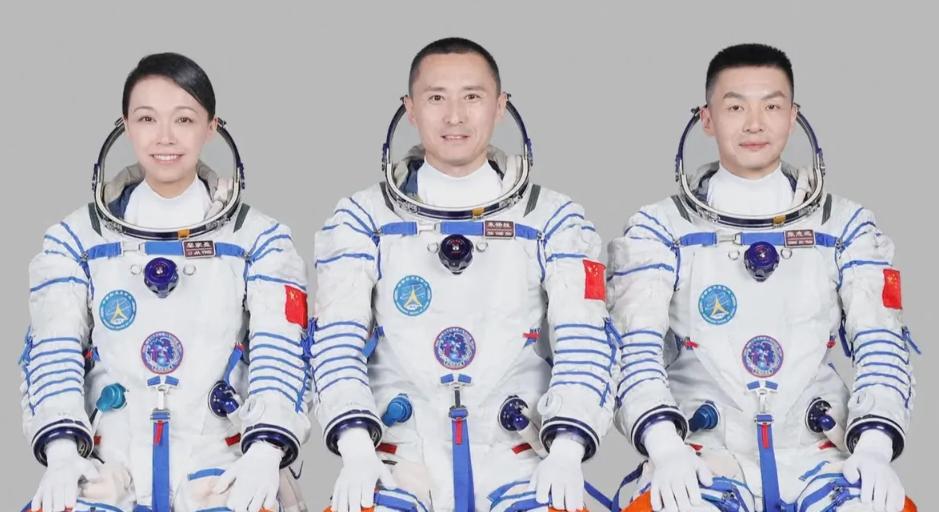
China has taken another major step in its ambitious space programme with the successful launch of its Shenzhou-23 mission on Sunday, sending three astronauts into orbit as part of its long-term plan to land humans on the Moon by 2030.
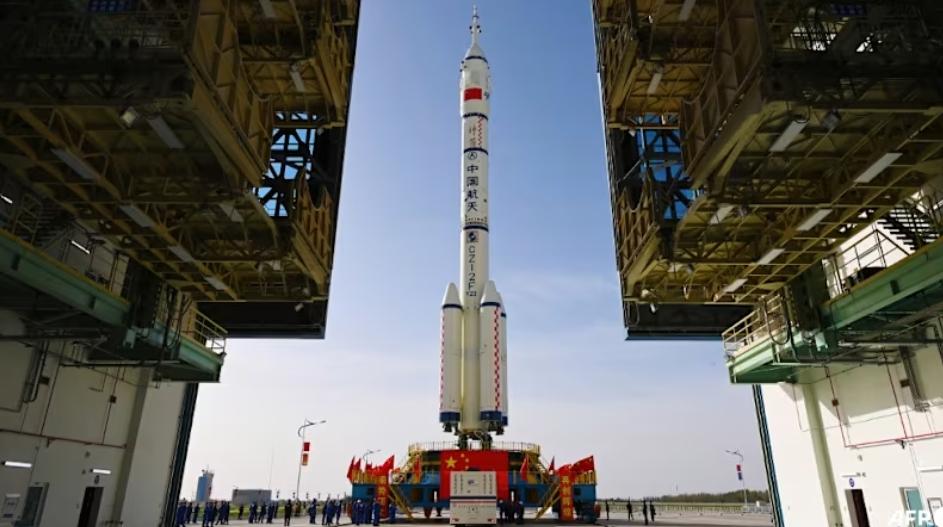
The Long March 2-F rocket lifted off at exactly 11:08 p.m. (1508 GMT) from the Jiuquan Satellite Launch Centre in the Gobi Desert, northwest China, lighting up the night sky as it carried the crew into space. The China Manned Space Agency (CMSA) later confirmed that the spacecraft separated from the rocket about 10 minutes after launch and safely entered orbit, declaring the mission a full success.
The mission is particularly historic as it includes Hong Kong’s first-ever astronaut, 43-year-old Li Jiaying – also known in Cantonese as Lai Ka-ying – a former member of the Hong Kong police force.
She is joined by 39-year-old space engineer, Zhu Yangzhu and 39-year-old former air force pilot, Zhang Zhiyuan, both of whom are making their first journey into space.
Ahead of the launch, cheering crowds gathered at a farewell ceremony waving Chinese flags as the astronauts saluted on stage while a band played.
According to Chinese authorities, the crew will carry out a range of scientific experiments covering life sciences, materials science, fluid physics, and medical research, all aimed at strengthening China’s long-term space capabilities.
A key highlight of the mission is a planned one-year stay in orbit by one of the astronauts, marking the first time China will attempt such an extended mission aboard its Tiangong space station.
Officials say the long-duration experiment will help assess the effects of prolonged space travel on the human body, particularly bone density loss, muscle deterioration, radiation exposure, sleep disruption, and psychological stress.
Space experts note that the mission is a crucial test of both human endurance and life-support systems, including air and water recycling, as China prepares for more complex missions beyond Earth.
The Shenzhou-23 mission also forms part of China’s broader roadmap toward lunar exploration, including the development of the Mengzhou spacecraft, expected to undergo orbital testing in 2026 and eventually replace the Shenzhou series for Moon missions.
Beijing aims to establish a preliminary manned lunar research base by 2035 under its International Lunar Research Station project, while also planning to send a Pakistani astronaut to the Tiangong space station later this year.
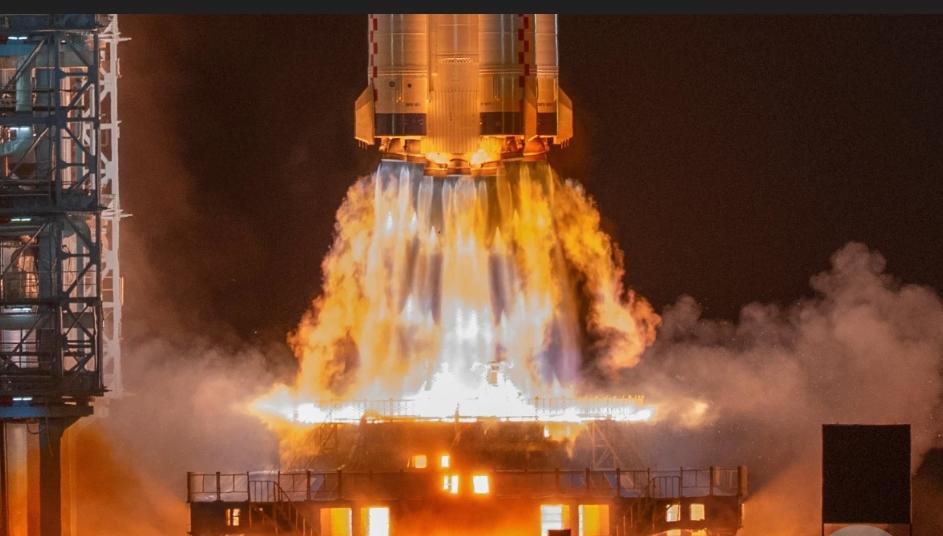
China’s space programme has expanded rapidly over the past three decades, with milestones including the 2019 landing of the Chang’e-4 probe on the far side of the Moon and the 2021 Mars rover landing, while continuing to build its independent space station after being excluded from the International Space Station in 2011.