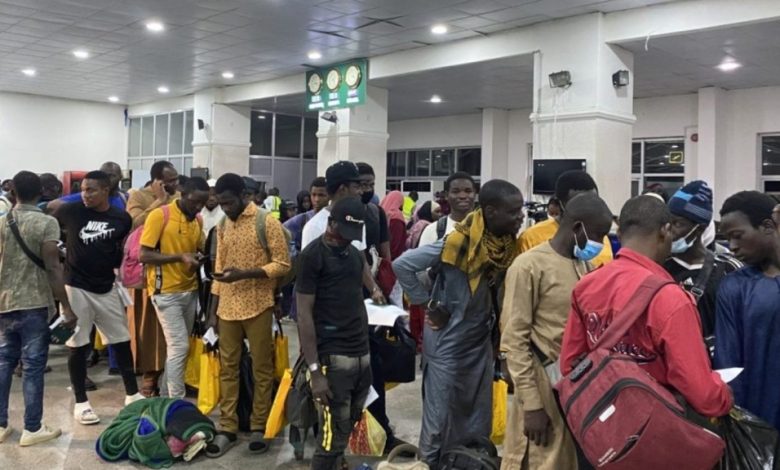
Another batch of Nigerians fleeing rising anti-immigrant tensions in South Africa has arrived in Lagos, as fears grow ahead of a planned June 30 protest targeting undocumented migrants in the country.
The latest returnees touched down at the Murtala Muhammed International Airport on Wednesday night after days of uncertainty and delays that left hundreds of Nigerians anxiously waiting for evacuation from South Africa.
More than 60 Nigerians were brought back in the second phase of the Federal Government’s voluntary repatriation exercise aimed at assisting citizens who no longer feel safe amid growing hostility towards foreign nationals in parts of South Africa.
The evacuees departed from Johannesburg’s O.R. Tambo International Airport at about 3:45 p.m. on Wednesday before arriving in Lagos later that evening, where government officials received them.
Among those evacuated were men, women and children, many of whom had registered for the programme following weeks of anti-immigration protests and increasing fears of violence.
The latest development comes barely two weeks after the first batch of over 260 Nigerians returned to the country on June 11 after opting for voluntary evacuation over concerns about xenophobic attacks and anti-foreigner sentiments.
The second evacuation flight had initially been scheduled for June 15 but was delayed due to logistical challenges, leaving many of those who registered for the programme uncertain about when they would be able to leave South Africa.
Speaking on Thursday, spokesperson for the Ministry of Foreign Affairs, Kimiebi Ebienfa, confirmed that a limited number of Nigerians had arrived home earlier in the day.
According to him, about 50 Nigerians were repatriated in the latest operation, while nearly 700 others who had registered for evacuation were still awaiting transportation back to Nigeria.
Ebienfa attributed the delays to logistical difficulties but assured that authorities were working to prioritise the evacuation of vulnerable citizens ahead of the June 30 deadline announced by anti-immigration groups in South Africa.
“We are working seriously to ensure that we move the most vulnerable back to Nigeria before that date,” he said.
Nigerian officials disclosed that the repatriation exercise remains voluntary and is only available to citizens who have indicated their willingness to return home.
The evacuation comes amid growing anxiety among Nigerians and other African nationals living in South Africa following weeks of demonstrations in several provinces demanding the removal of undocumented migrants.
Some protest groups have accused foreign nationals of contributing to crime, unemployment and pressure on public infrastructure and social services, claims that have fuelled tensions in parts of the country.
The situation has prompted several African countries, including Ghana, Malawi, Mozambique and Zimbabwe, to begin assisting citizens who wish to return home because of security concerns.
South African authorities have repeatedly urged citizens not to take the law into their own hands, warning that only security agencies have the legal authority to enforce immigration laws or verify the status of migrants.
Security has since been tightened in several provinces ahead of the planned June 30 protests, with police deploying additional personnel to identified flashpoints.
President Cyril Ramaphosa has publicly condemned xenophobia and attacks against foreign nationals while also pledging tougher action against illegal immigration and stronger border controls.
Addressing the nation on June 7, 2026, Ramaphosa said South Africa was introducing measures aimed at tackling illegal migration without encouraging violence or hostility towards foreigners.
“We must end illegal migration, we must deal with the challenges. We reject the notion that we must tolerate illegal migration. We can enforce our laws, secure our communities and overcome the problem of illegal migration,” the South African President said.
However, he insisted that illegal immigration should not be blamed for the country’s economic difficulties.
“We know that migration is a global issue affecting many countries around the world and our country, like many others throughout history, is a product of migration.
“Yet we must recognise that illegal immigration is not the cause of all our economic challenges,” Ramaphosa added.