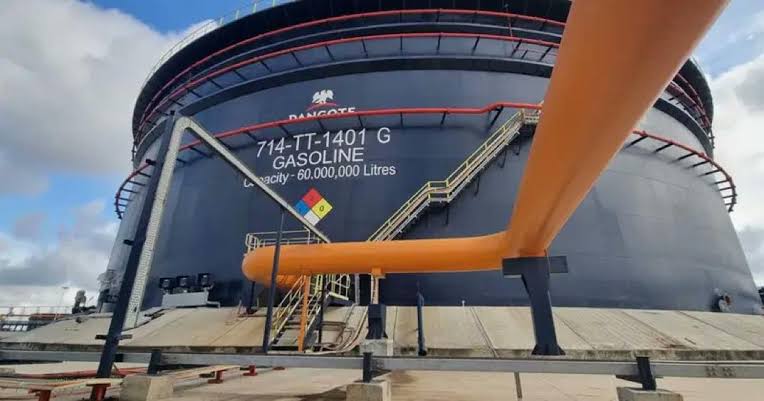
Dangote’s oil refinery, the biggest in Africa, has made a big step forward. Its Crude Distillation Unit (CDU) and Motor Spirit (MS) production block are now running at their maximum capacity of 650,000 barrels per day. This is the first time any refinery around the world has reached this level.
After finishing planned maintenance and improvements on these important units, Dangote Petroleum Refinery announced this accomplishment. The refinery has started a 72-hour performance test with UOP, the technology licensor, to make sure the plant is working well and that everything meets international standards.
David Bird, the Chief Executive Officer, said that this success shows how well-engineered and strong the refinery is. Our people have been very careful in getting the CDU and MS Block to work as well as they can, Bird said. This testing period lets us check the whole plant under real working conditions. We are sure we can provide a consistent, top-quality output.
The CDU and MS Block, which includes the naphtha hydrotreater, isomerisation unit, and reformer unit, are now running smoothly at full capacity. Bird said that the remaining processing units will be tested in Phase 2, which starts next week.
With this increased capacity, the refinery can now supply up to 75 million litres of Premium Motor Spirit (PMS) to Nigeria every day. This is a big jump from the 45-50 million litres provided during the recent holiday season.
Bird thanked the customers and the Nigerian people, restating the refinery’s promise to make Nigeria’s energy supply more secure. The goal is to stop importing petroleum products, turn Nigeria into a net exporter, and boost industrial growth and economic progress.
The Dangote refinery is a huge project, costing around $19 billion. It is located in Lekki, near Lagos, and covers an area of 2,635 hectares (six times the size of Victoria Island). The refinery can process 650,000 barrels of crude oil each day. Besides PMS, it will also produce diesel, kerosene, and jet fuel. This should meet all of Nigeria’s needs for these products and leave some extra for export.
The refinery includes a gas pipeline project to supply gas to the plant and other businesses in the area. There are also 435 tanks for storing crude oil and refined products. The refinery has its own power plant that can generate 480 megawatts, which is enough to power the refinery complex and still have 80 megawatts left over. There is also a fertiliser plant that can produce 3 million tonnes of urea each year, and a petrochemical plant.
The project is expected to create a lot of jobs, with 100,000 direct and indirect employment opportunities. This will help develop skills and transfer technology in the region. Once it is fully operational, the refinery should add about $12 billion each year to Nigeria’s foreign exchange earnings through export substitution and generating exports. This will also save the country about $9 billion each year from importing petroleum products.
The Dangote refinery is more than just an industrial project. It represents Nigeria’s ambition to become self-sufficient in energy and a major player in the global oil market. It is expected to have a big positive effect on the Nigerian economy and the wider region.