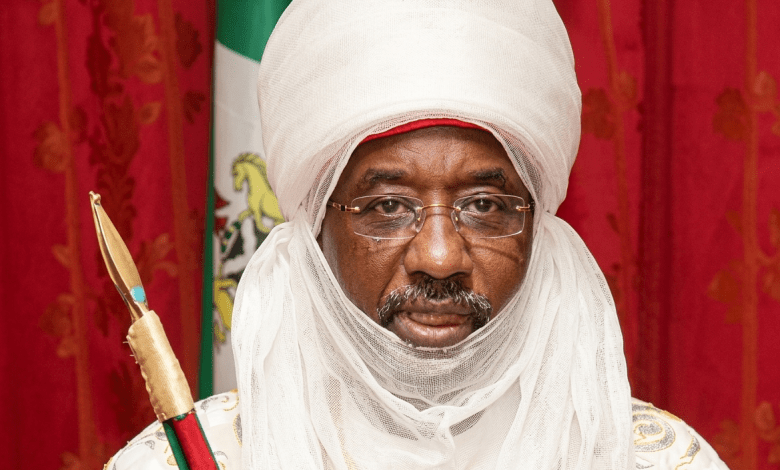
The Emir of Kano, Muhammadu Sanusi II, has pushed back against Vice President Kashim Shettima’s claim that Lagos produced Africa’s richest men, insisting that the business journeys of Aliko Dangote and Abdul Samad Rabiu were firmly rooted in Kano long before their expansion to other parts of the country.
Speaking during an engagement with members of the Institute of Chartered Secretaries and Administrators of Nigeria (ICSAN), Sanusi described Kano as a historic centre of commerce whose rich trading culture helped shape generations of successful entrepreneurs.
The monarch maintained that both Dangote and Rabiu were products of Kano’s long-established business tradition, noting that their move to Lagos was aimed at growing already-existing enterprises rather than learning the fundamentals of trade.
“These businessmen went to Lagos to expand their businesses and learn from the commercial environment there, not to learn how to do business from the beginning,” Sanusi said.
He stressed that Kano’s commercial legacy has, for decades, produced influential merchants and business leaders, adding that the city’s entrepreneurial environment laid the groundwork for many of the continent’s biggest success stories.
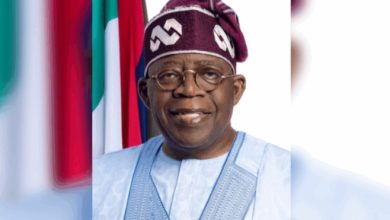
Sanusi’s remarks come days after comments made by Vice President Kashim Shettima at the Invest Lagos Summit 3.0 on Monday, where he praised Lagos State’s economic climate and its role in wealth creation.
During the summit, Shettima argued that Lagos was responsible for producing Africa’s richest individual, saying: “Lagos produced Africa’s richest man, not Kano. Aliko Dangote is a Lagos boy. Likewise, it was not Kano that produced Africa’s second-richest man, Abdul Samad Rabiu.”
The Vice President made the statement while highlighting Lagos State’s contribution to Nigeria’s economy and its reputation as a destination for private-sector growth.
Sanusi’s rebuttal has since ignited fresh conversations over the roles played by Kano and Lagos in shaping some of Nigeria’s most successful business figures, reopening a wider debate about the nation’s commercial heritage and economic identity.