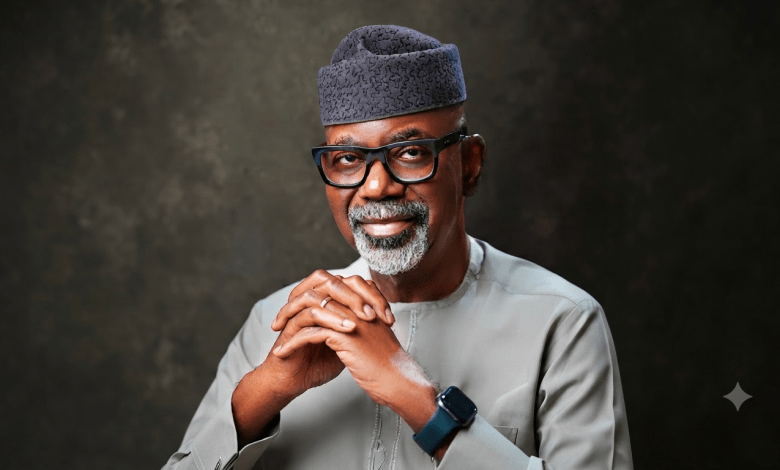
As Senator Liyel Imoke marks his 65th birthday on Friday, July 10, tributes are pouring in for a statesman whose influence has stretched far beyond the offices he once occupied. Rather than being defined solely by political positions, Imoke is being celebrated for his commitment to reform, institution building and nurturing future leaders.
In a tribute by Public Relations and Strategic Communications expert, Rasheed Olanrewaju, Imoke’s journey was described as one shaped by more than three decades of public service, strategic leadership and an unwavering belief that lasting success lies in building systems and empowering people for generations to come.
Born on July 10, 1961, at the University College Hospital, Ibadan, Imoke was raised in a family with a strong tradition of public service. His father, the late Dr. Samuel Imoke, served Nigeria in key ministerial positions, including Finance, Labour and Education, between 1953 and 1966, while his mother, the late Mrs. Comfort Imoke, was a respected nurse, midwife and pioneer in community and public health.
His educational journey took him across Nigeria, the United States and the United Kingdom before he was called to the Nigerian Bar in 1988. He attended Santa Maria Primary School, Enugu; Ireti Primary School, Lagos; Government Primary School, Itigidi; Maryknoll College, Ogoja; and Federal Government College, Enugu. He later obtained a degree in International Relations with a minor in Economics from the University of Maryland, College Park, studied Law at the University of Buckingham, England, and completed postgraduate legal studies at the American University in Washington, D.C.
Before venturing into politics, Imoke practised law in Washington, D.C. and Lagos while pursuing business interests in different sectors. At the age of 30, he became one of Nigeria’s youngest senators, beginning a political career that would later span legislative duties, policy reforms and executive leadership.
During his years in national service, he became closely associated with institutional reforms, particularly in Nigeria’s electricity sector. He served as Special Adviser to the President on Public Utilities, Chairman of the Technical Board of the defunct National Electric Power Authority, and later as Minister of Power and Steel.
Imoke played a key role in major electricity sector reforms, including the Electric Power Sector Reform Act of 2005, the establishment of the Nigerian Electricity Regulatory Commission, the Rural Electrification Agency, the unbundling of NEPA and the conceptualisation of the National Integrated Power Project.
He also chaired the board that oversaw the winding down of the Oil Minerals Producing Areas Development Commission, paving the way for the creation of the Niger Delta Development Commission.
The same reform-driven philosophy shaped his administration as Governor of Cross River State, beginning in 2007. His government introduced changes in public financial management, procurement, healthcare, education, environmental sustainability and local government administration, while promoting transparency and accountability.
Among the flagship projects executed during his tenure were Summit Hills, the Greater Calabar Urban Renewal Programme and the Meetings, Incentives, Conferences and Exhibitions strategy, all designed to diversify Cross River’s economy and encourage sustainable development.
Olanrewaju noted that one of the hallmarks of the Imoke administration was its focus on grassroots development. Roads, healthcare, education, agriculture and social intervention programmes were expanded across all 18 local government areas, reflecting his belief that governance should reach every community rather than remain concentrated in the state capital.
His calm and methodical style of leadership earned him the nickname “Imokeism,” while his signature Chief Obafemi Awolowo-style cap became a defining part of his public identity. According to Olanrewaju, Imoke once revealed that his birth in Ibadan inspired his fondness for the iconic cap.
Fondly called “Avatar” by many admirers, Imoke was also recognised for investing heavily in human capital. Olanrewaju, who served under him throughout his eight years as Governor, said the former Governor consistently demonstrated that leadership was about developing people as much as building infrastructure.
After leaving office, Imoke established The Bridge Leadership Foundation in 2011 to mentor and equip young Nigerians with leadership skills. Through mentorship, civic engagement and personal development programmes, the Foundation has impacted more than 62,000 young Nigerians, mentees and trainers.
According to Olanrewaju, Imoke’s greatest legacy lies not only in the positions he occupied but in the institutions he strengthened, the reforms he championed, the communities he empowered and the thousands of lives he has influenced through leadership and mentorship.
He concluded by congratulating Senator Liyel Imoke on his 65th birthday, describing him as a reformer, nation builder and mentor whose legacy continues to inspire generations of Nigerians.