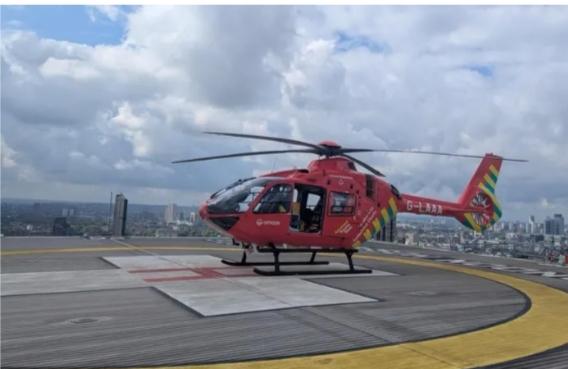
London’s Air Ambulance Service has raised alarm over soaring fuel costs triggered by the ongoing conflict in the Middle East, warning that the charity could soon face serious financial pressure if the situation drags on.
The life-saving organisation said the price of aviation fuel has more than doubled in just a few months, forcing it to divert donation funds toward keeping its helicopters in the air.
Captain Chris Sherriff, one of the service’s pilots, said the charity depends heavily on public support and donations to survive, but rising operational expenses are now eating deep into those funds.
“At the moment, we’re having to channel money meant for projects into paying for fuel,” he explained.
According to the charity, the cost of operating its helicopter has climbed from £222 per hour in February to £483 per hour. Fuel prices jumped from 89p per litre in February to £1.93 by April — a staggering 116% increase.
Sherriff revealed that the helicopter burns about 250 litres of fuel every hour it flies, describing the new costs as “significant”.
He added that the organisation hopes the crisis does not eventually force cuts to emergency operations.
The sharp increase in fuel prices began after tensions escalated during the US-Israel conflict involving Iran earlier this year. Missile strikes and drone attacks reportedly disrupted energy production and transportation routes across parts of the Middle East, pushing up global fuel prices.
The impact has also been felt by ordinary motorists across the U.K., with the average cost of filling a family petrol car increasing by about £14, while diesel users are paying roughly £27 more.
The U.K. government, however, insisted there was no immediate shortage of fuel supplies.
In a statement to the BBC, officials said the country remains adequately stocked and that authorities are working closely with suppliers to ensure businesses and residents are not severely affected while the conflict continues.
Other charities across London say they are also struggling with the knock-on effect of rising fuel costs.
The Felix Project, which distributes food to vulnerable people across the capital, said the increase has forced difficult decisions.
Rachel Ledwith of the charity said demand for support keeps growing, with about 800 organisations currently on its waiting list, but the rising cost of transportation is making expansion difficult.
Meanwhile, SERV Surrey and London Blood Bikes revealed that its own fuel expenses have risen by 36% since the conflict began.
Vice Chairwoman, Katie Stevens, said the long-term impact remains uncertain and worrying, though she insisted measures are already in place to maintain uninterrupted deliveries of blood products, medical supplies and donated breast milk to hospitals.