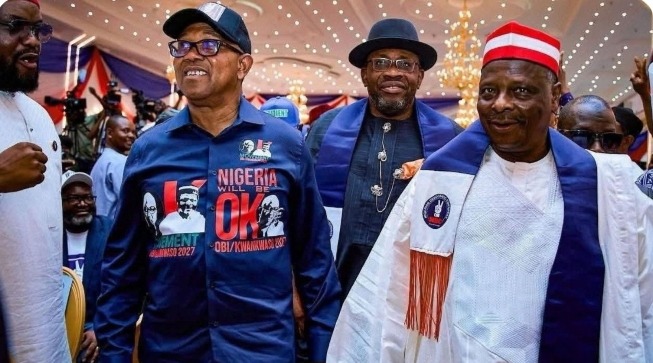
The Nigeria Democratic Congress (NDC) has exempted its presidential candidate, Peter Obi, and his running mate, Rabiu Musa Kwankwaso, from signing the Party’s mandatory anti-defection oath, a move that has triggered fresh debate over equal treatment within the Party.
The decision, announced on Thursday, comes barely two days after the NDC unveiled the anti-defection policy requiring its candidates to swear affidavits and sign indemnity forms pledging not to dump the Party after winning elections.
Under the policy introduced by the Party leadership on Tuesday, June 16, 2026, all candidates seeking elective offices on the NDC platform are expected to sign legally binding documents committing themselves to remain in the Party after securing electoral victory.
According to the Party, the initiative is aimed at strengthening internal discipline, promoting loyalty and addressing the growing wave of defections that has weakened political parties across the country.
However, the presidential ticket of Obi and Kwankwaso has been exempted from the requirement.
While the NDC maintained that the anti-defection policy remains compulsory for candidates contesting governorship, National Assembly, state assembly and other elective positions, it did not publicly explain why the presidential candidate and his running mate were excluded.
The development has already generated reactions within political circles, with critics questioning why a policy designed to ensure loyalty and commitment should not apply to the Party’s highest-profile candidates.
Political observers argue that exempting the presidential ticket could undermine the credibility of a policy intended to discourage the culture of elected officials defecting to rival parties after winning office.
The anti-defection initiative was unveiled amid increasing concerns over the frequent movement of politicians between parties, a trend many stakeholders say weakens party ideology, erodes voter confidence and distorts Nigeria’s democratic process.
The NDC had earlier directed its governorship, National Assembly and other candidates to sign sworn affidavits and indemnity forms as a condition for flying the Party’s flag in future elections, insisting that elected officials must remain faithful to the platform on which they were elected.
Although the Party has defended the policy as a tool for strengthening internal cohesion, the decision to exempt Obi and Kwankwaso is expected to fuel further debate over fairness, consistency and accountability within the Party.