
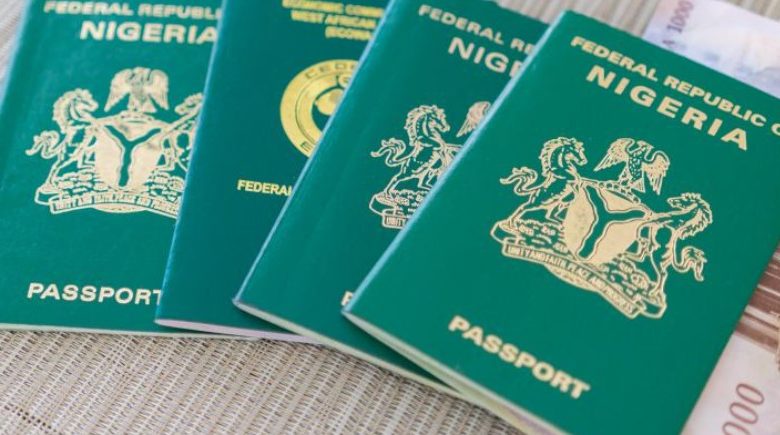
Nigeria’s international travel standing has recorded a modest improvement, as the country’s passport moved up in the latest global rankings. However, despite this progress, the number of destinations Nigerians can access without prior visas remains relatively low.
According to the Henley Passport Index, the Nigerian passport climbed to around 89th position out of 199 countries in its 2026 assessment. This marks a noticeable rise from its previous ranking, where it had fallen as low as 103rd place in earlier reports.
The index, which is widely regarded as a benchmark for measuring global mobility, ranks passports based on the number of destinations their holders can access without obtaining a visa beforehand. It relies on data from the International Air Transport Association (IATA) and additional research inputs.
Despite the improved ranking, Nigerian passport holders still face significant travel limitations. Current data shows that citizens can access only about 44 countries either visa-free or through visa-on-arrival arrangements.
This means that while Nigeria has made gains in global positioning, the practical benefits for travelers remain modest. Many popular destinations across Europe, North America, and parts of Asia still require Nigerian citizens to obtain visas before departure.
Analysts say that passport strength is closely tied to diplomatic relations, security perceptions, and bilateral agreements between countries. Nations with stronger international ties and stable migration policies tend to enjoy broader visa-free access for their citizens.
In comparison, some of the world’s most powerful passports—such as those from countries like Singapore and Japan—offer access to more than 190 destinations without a prior visa, highlighting the wide gap in global mobility.
For Nigeria, the recent improvement suggests gradual progress, possibly reflecting evolving diplomatic engagements and policy adjustments. However, experts note that sustained efforts will be required to significantly expand visa-free agreements and improve global mobility for citizens.
Travel and immigration observers also point out that rankings can fluctuate annually, depending on changes in international relations, security concerns, and visa policy updates by other countries.
While the upward movement may be seen as a positive signal, many Nigerians continue to face hurdles when planning international travel, including lengthy visa application processes and high rejection rates.
Ultimately, the latest ranking underscores a mixed reality: Nigeria’s passport is gaining ground globally, but the everyday travel experience for its holders still involves considerable restrictions.