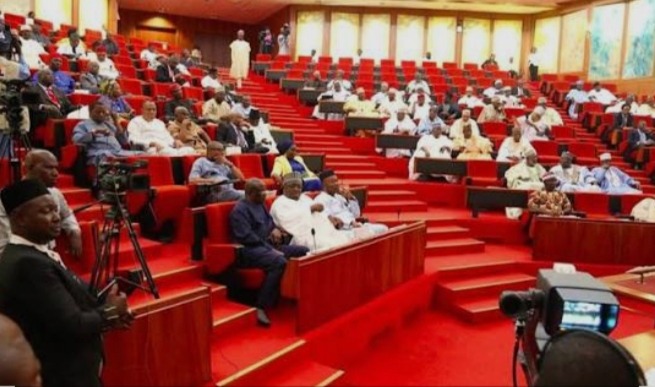
On May 7, 2026, the Nigerian Senate made a dramatic reversal on a controversial decision it had taken just two days earlier, scrapping an amendment that had restricted eligibility for top legislative offices.
The Senate had on Tuesday, May 5, 2026, amended its Standing Orders in a marathon executive session, introducing strict rules that effectively barred first-time senators from contesting positions such as Senate President and Deputy Senate President. The amendment created a hierarchy that prioritised former Senate Presidents, former Deputy Senate Presidents, experienced principal officers, and returning lawmakers, while placing first-time senators at the bottom of the eligibility ladder.
The move sparked immediate debate within political circles, as it appeared to predetermine leadership outcomes for the 11th National Assembly and the 2027 political cycle.
However, in a swift turn of events, the Senate rescinded the controversial amendment on Thursday, May 7, 2026, through a motion sponsored by Senate Leader, Opeyemi Bamidele, and presided over by Deputy Senate President, Jubril Barau.
According to Bamidele, the reversal became necessary after further legislative and constitutional review revealed that the earlier amendments to Order 2(2) and Order 3(1) of the Senate Standing Orders could conflict with provisions of the 1999 Constitution (as amended), particularly Section 52.
With the reversal, the Senate restored full eligibility for all elected senators, effectively reopening the race for key leadership positions without tenure-based restrictions.
The decision also signals a shift toward a more open and competitive internal political process, moving away from attempts to structure leadership outcomes based on ranking or tenure.
The motion was formally titled “Rescission and Re-Committal of Order 2(2) and Order 3(1) of the Senate Standing Orders, 2023 (as amended)”, and also included related legislative adjustments, including the reconsideration of the National Identity Management Commission (Establishment) Bill, 2026.
The development has further intensified political interest ahead of the next National Assembly leadership contest, with senators now free to compete regardless of experience or time spent in office.