
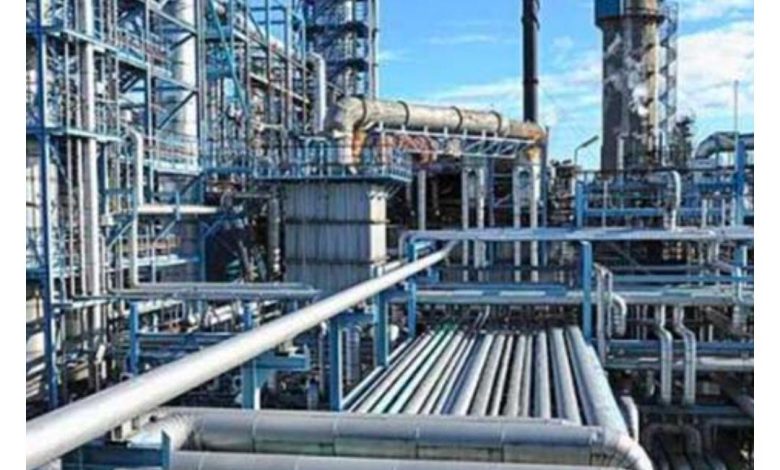
The Nigerian National Petroleum Company Limited is considering handing Chinese investors a 51% stake in the Port Harcourt and Warri refineries. The move forms part of a broader plan to rehabilitate the facilities and reposition them for commercial profitability after years of underperformance.
The arrangement emerged after NNPC signed a Memorandum of Understanding with two Chinese firms on April 30, 2026, in Jiaxing City, China. The companies are Sanjiang Chemical Company Limited and Xinganchen (Fuzhou) Industrial Park Operation and Management Co., Ltd. NNPC described the agreement as a “potential technical equity partnership” that goes beyond conventional rehabilitation contracts.
Group Chief Executive Officer of NNPC Ltd, Bayo Ojulari, signed the MoU for Nigeria. Chairman of Sanjiang Chemical, Guan Jianzhong, and Chairman of Xinganchen Industrial Park Operation and Management Co. Ltd, Bill Bi, signed for the Chinese side. According to NNPC sources, the deal is structured around an NLNG-type model where the Chinese partners would own 51% equity in both refineries, participate in governance, and take on long-term operational responsibilities.
This mirrors the Nigeria LNG structure where foreign investors hold majority stakes, share management duties, and commit to long-term funding and technical input. The Chinese firms are expected to support the completion of outstanding work at the Port Harcourt and Warri refineries. The deal also includes plans for refinery expansion, petrochemical projects, and the development of gas-based industrial hubs in Nigeria. NNPC believes this approach will attract capital, expertise, and operational discipline that have been missing in past rehabilitation efforts.
NNPC has spent billions on refinery rehabilitation with little to show for it. The Port Harcourt refinery only achieved partial mechanical completion in 2024, while Warri has faced repeated delays. Management believes that giving majority equity to experienced foreign partners will reduce the financial burden on the federal government and improve accountability. By adopting the NLNG model, NNPC hopes to replicate the success of Nigeria LNG Limited, which has operated profitably since 1999 with Shell, TotalEnergies, and Eni as partners.
The proposal has triggered strong reactions across the country. Former Vice President Atiku Abubakar and other stakeholders criticized the choice of Chinese firms, describing them as “technically unqualified” for a project of this scale. They argued that Nigeria should prioritize companies with proven refinery management experience to avoid repeating past failures. Critics also raised concerns about transparency and long-term control of critical national assets.
Supporters of the deal counter that Nigeria cannot continue to run refineries at a loss. They argue that foreign equity and management will bring discipline, faster project delivery, and access to global markets. Proponents point to NLNG as proof that joint ventures with foreign partners can work when structured properly. Talks are still ongoing, and the final terms of the partnership have not been made public. NNPC has not disclosed the investment size, timeline, or equity valuation.
For now, the government faces the challenge of balancing the need for private capital and expertise with public concerns about asset ownership and national interest. The outcome of this deal could set a template for future partnerships in Nigeria’s oil and gas industry. Many industry watchers believe the decision will test public confidence in NNPC’s reform agenda and determine whether Nigeria can finally end its dependence on imported refined products.