
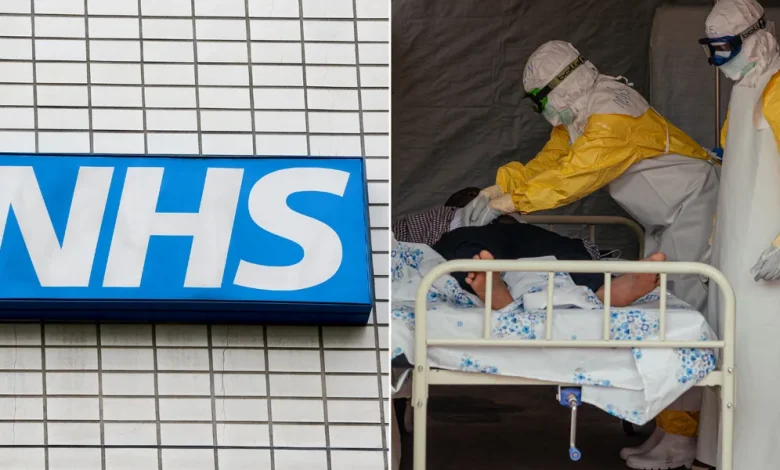
The National Health Service (NHS) has issued a nationwide preparedness alert to healthcare providers across the United Kingdom, directing hospitals, GP practices, ambulance services, and frontline medical staff to review Ebola response plans, verify stocks of personal protective equipment (PPE), and ensure isolation facilities are ready to receive suspected patients.
The directive, distributed through the UK Health Security Agency (UKHSA), comes as British health authorities closely monitor developments surrounding Ebola outbreaks in parts of Central Africa, particularly in the Democratic Republic of Congo (DRC) and Uganda.
While officials continue to stress that the immediate risk to the UK population remains low, the alert reflects growing concern among public health experts about the potential for imported cases through international travel networks.
Why UK Health Officials Are Taking Action
According to health officials, the latest NHS alert is not a response to any confirmed Ebola case in Britain but rather a precautionary measure designed to ensure healthcare facilities can rapidly identify and contain any suspected infection before wider exposure occurs.
Public health specialists say Ebola remains one of the world’s most dangerous infectious diseases due to its high fatality rate and the speed at which outbreaks can overwhelm healthcare systems if not contained early.
The UK maintains direct and indirect travel links with numerous African nations, and health authorities routinely monitor outbreaks overseas for signs that additional border screening, travel advice, or healthcare precautions may be required.
Medical experts note that Ebola symptoms may not appear until several days or even weeks after exposure. The incubation period can last up to 21 days, meaning an infected traveller could enter the country without displaying symptoms before later becoming ill.
This delay is one of the main reasons the NHS has activated heightened preparedness measures despite there being no confirmed cases in the UK.
Hospitals Ordered to Review Protective Equipment and Isolation Capacity
Under the alert, healthcare providers have been instructed to review the availability of PPE, including gloves, masks, gowns, face shields, and other specialised protective equipment used in managing high-consequence infectious diseases.
NHS trusts have also been reminded to ensure designated isolation rooms remain operational and that staff are familiar with procedures for managing patients presenting with symptoms consistent with Ebola.
Healthcare workers are being encouraged to refresh their understanding of infection prevention protocols, patient transportation procedures, and emergency reporting requirements.
The move reflects lessons learned during previous global health emergencies, particularly the COVID-19 pandemic, when shortages of PPE and delays in infection control measures exposed vulnerabilities within healthcare systems worldwide.
Officials are keen to ensure that no similar preparedness gaps exist should a suspected Ebola case emerge.
Increased Focus on Frontline Staff
Sources within the healthcare sector say frontline workers are being reminded to ask detailed questions about travel history when assessing patients presenting with fever-like symptoms.
Emergency departments, GP surgeries, urgent care centres, and ambulance services are expected to play a critical role in identifying potential cases.
Any patient with symptoms compatible with Ebola and a recent travel history linked to affected regions would immediately trigger enhanced infection control measures.
Healthcare workers have also been reminded that early recognition remains the most effective defence against transmission within medical settings.
How the UK Would Respond to a Suspected Ebola Case
If a suspected Ebola patient is identified, strict protocols would be activated almost immediately.
The patient would be isolated, specialist infectious disease teams would be consulted, and laboratory testing would be arranged under controlled conditions.
Contact tracing procedures could also be initiated to identify anyone who may have been exposed before isolation measures were implemented.
The UK maintains specialist high-level isolation facilities capable of treating patients with highly infectious diseases. These facilities are designed to prevent transmission while allowing medical teams to provide intensive care treatment when required.
Health authorities say these systems have been tested repeatedly through training exercises and previous infectious disease responses.
International Concerns Driving Global Vigilance
The NHS alert comes amid broader international concern over the resurgence of Ebola outbreaks in parts of Africa.
Global health agencies continue to monitor developments closely due to the potential for cross-border spread through international travel.
Although Ebola does not spread as easily as airborne viruses such as influenza or COVID-19, outbreaks can become deadly when infections are not identified and contained quickly.
The World Health Organisation and national public health agencies are working with affected countries to strengthen surveillance, improve case detection, and support vaccination and treatment efforts where available.
Government Reassures Public
British health officials have sought to reassure the public that the current alert is a preparedness measure rather than an indication of an immediate threat.
Officials maintain that the likelihood of Ebola spreading within the UK remains very low and that robust systems are already in place to detect and manage suspected cases.
However, the nationwide alert demonstrates that health authorities are taking no chances, opting instead for early preparedness while monitoring developments in Africa and assessing potential risks to the United Kingdom’s healthcare system.