ABUJA, Nigeria | October 20, 2026
The Federal Government has confirmed a case of Ebola Virus Disease (EVD) in the Federal Capital Territory (FCT), Abuja, following laboratory tests on a woman who recently arrived in Nigeria from Uganda.
The Coordinating Minister of Health and Social Welfare, Professor Muhammad Ali Pate, announced the development on Tuesday, October 20, 2026, stating that the patient was receiving medical care in isolation as health authorities intensified efforts to prevent further transmission.
According to the government, 44 close contacts of the confirmed case have so far been identified, with public health teams working to locate, assess and monitor individuals who may have been exposed to the virus.
The confirmation has prompted heightened public health vigilance, with the Federal Ministry of Health and Social Welfare, the Nigeria Centre for Disease Control and Prevention (NCDC), and FCT health authorities coordinating measures to contain the infection.
Patient in Isolation and Receiving Treatment
In a statement released on Tuesday, the Federal Government disclosed that the patient, a woman with a recent travel history to Uganda in East Africa, had been admitted to a private hospital in Abuja after developing symptoms.
The woman reportedly began experiencing symptoms on October 7 and sought medical attention at a private health facility on October 11. Laboratory investigations subsequently confirmed that she had contracted Ebola Virus Disease.
Health authorities said the patient had been placed in isolation and was receiving medical care. The Minister also indicated that her condition was stable.
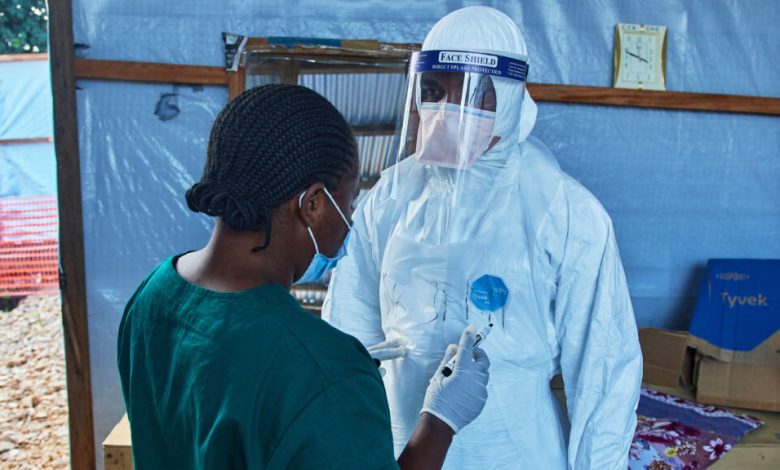
The government is providing support to the hospital where she received treatment to strengthen infection prevention and control measures and reduce the risk of possible exposure among healthcare workers, other patients and caregivers.
The circumstances surrounding the patient’s exposure, including the precise source of infection and the possibility of additional exposures, remain subject to ongoing public health investigations.
Contact Tracing Begins as 44 People Are Identified
A major component of the government’s response is contact tracing, a public health process used to identify people who may have come into contact with an infected person.
The Federal Government confirmed that 44 contacts had been identified as of Tuesday. They include healthcare workers, patients, caregivers and people connected to the patient’s travel.
Public health teams are working to establish the extent of possible exposure and monitor those identified in accordance with official health protocols.
The government has urged anyone who may have travelled with the patient, or who is contacted by public health officials during the investigation, to cooperate fully and provide accurate information.
Contact identification does not mean that all 44 individuals have contracted Ebola. They are being assessed because they may have been exposed, and health authorities need to determine whether any further action is necessary.
The number of identified contacts could also change as investigations progress and officials establish a clearer picture of the patient’s movements and interactions.
FG Places Healthcare Facilities on High Alert
Following the confirmation, the Federal Government called on public and private healthcare facilities across the country to remain on high alert for possible Ebola cases.
Healthcare workers have been directed to maintain a high level of suspicion when assessing patients with symptoms that could be consistent with Ebola, particularly where there is a relevant travel history or known exposure.
The government stressed the importance of promptly identifying and isolating suspected cases, observing strict infection prevention and control procedures, and immediately reporting suspected infections to the appropriate public health authorities.
Hospitals and other healthcare facilities are also expected to strengthen protective measures for medical personnel and patients while ensuring that suspected cases are referred for appropriate testing and treatment.
The NCDC and other relevant agencies are intensifying surveillance and coordinating the response to ensure that any additional cases are detected early.
The measures are intended to limit opportunities for transmission while investigations continue.
Nigeria’s Preparedness and the 2014 Ebola Outbreak
The Federal Government has expressed confidence in Nigeria’s ability to respond to the confirmed case, recalling the country’s experience in containing the Ebola outbreak in 2014.
During that outbreak, Nigeria recorded 20 cases, including confirmed and probable infections, after the virus was introduced into the country by an infected traveller. The outbreak was subsequently contained through coordinated surveillance, contact tracing, isolation, infection control and public health interventions.
The experience remains an important reference point for Nigeria’s current response.
The government has also established preparedness and coordination structures to strengthen the country’s capacity to respond to emerging infectious disease threats.
However, health authorities have emphasised that preventing further transmission will require rapid detection, effective contact tracing, cooperation from people who may have been exposed and strict adherence to infection prevention measures.
The Federal Government said it was working with the FCT authorities and relevant public health partners to protect healthcare workers, patients and the wider public.
Regional Ebola Outbreak Raises Public Health Concerns
Nigeria’s confirmed case comes amid an ongoing Ebola outbreak involving the Bundibugyo virus in parts of Africa.
The outbreak has prompted heightened surveillance across the region, particularly because of cross-border travel and the possibility that infected individuals could move between countries before their infection is detected.
Kenya has also reported Ebola cases linked to the wider regional outbreak, while Uganda had previously experienced cases before being declared free of the virus in August 2026.
The latest development in Nigeria highlights the importance of coordinated disease surveillance, timely laboratory diagnosis, effective isolation and information-sharing among countries.
Although Nigeria has confirmed a case, the available information does not establish that there is widespread community transmission in the country. Further investigations and contact tracing will be critical in determining whether additional infections have occurred.
The government has not announced a nationwide lockdown or a general restriction on movement in connection with the case.
Ebola Symptoms and Public Safety Advisory
Ebola is a serious viral disease that can cause severe illness and death. It spreads primarily through direct contact with the blood or other bodily fluids of an infected person who is symptomatic, or through contaminated objects and materials.
According to the NCDC’s published case definition, warning signs may include sudden fever, severe weakness, headache, muscle or joint pain, loss of appetite, vomiting, diarrhoea and, in some cases, unexplained bleeding.
Anyone who develops symptoms after a possible exposure should seek immediate guidance from public health authorities and avoid close contact with others while awaiting further instructions.
Members of the public are advised to:
- Wash their hands regularly with soap and water.
- Avoid direct contact with the blood and bodily fluids of anyone suspected of having Ebola.
- Cooperate with public health officials if contacted during the tracing exercise.
- Avoid spreading unverified reports or stigmatising people who may have been exposed.
- Report suspected cases promptly and follow instructions from health authorities.
The NCDC’s toll-free public information and reporting line is 6232, available 24 hours a day, seven days a week.
FG Appeals for Calm and Cooperation
The Federal Government has appealed to Nigerians to remain calm, vigilant and cooperative as health authorities work to contain the infection.
The government stressed that early detection, prompt reporting, effective contact tracing and strict infection prevention measures are essential to preventing further spread.
It also assured the public that the Federal Ministry of Health and Social Welfare, the NCDC, FCT health authorities and relevant partners are working together to manage the situation.
Investigations remain ongoing, and authorities are expected to provide further updates as more information becomes available.
For now, the immediate priority is to ensure that the patient receives appropriate medical care, all potential contacts are identified and monitored, and any additional infections are detected quickly.
The Federal Government has urged Nigerians to rely on verified information from official health authorities as the public health response continues.