ABUJA— Nigeria is preparing to sign a $25 billion intergovernmental agreement with Morocco for a massive transcontinental gas pipeline project expected to reshape energy supply across West Africa and Europe.
The development was revealed by Amina Benkhadra, head of Morocco’s hydrocarbons and mining agency, Office National des Hydrocarbures et des Mines, ONHYM, according to a report by Reuters.
Specifically, she said the formal agreement between both governments is expected to be signed before the end of the year.
Pipeline Route and Capacity
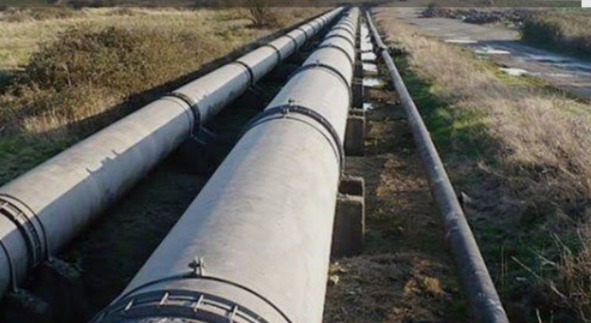
The proposed African Atlantic Gas Pipeline will span about 6,900 kilometres, running through both offshore and onshore routes along the Atlantic coast.
Once operational, the pipeline is projected to transport up to 30 billion cubic metres of natural gas annually.
Notably, 15 billion cubic metres will be reserved for Morocco and exports to Europe.
Regional Impact and Structure
The project is expected to strengthen economic integration across West Africa by improving electricity generation capacity.
In addition, it will support industrial and mining activities in participating countries.
Furthermore, it will help Morocco position itself as a strategic energy gateway linking Africa and Europe.
Meanwhile, after the agreement is finalised, a high-level governing authority will be established in Nigeria.
The body will include ministers from 13 participating countries and will coordinate political and regulatory matters tied to the project.
According to Benkhadra, a project company will also be created in Morocco as a joint venture between ONHYM and the Nigerian National Petroleum Company Limited, NNPC Ltd.
The company will oversee the pipeline’s execution, financing and construction.
Phased Development to 2031
Benkhadra explained that the pipeline will be built in phases to allow different sections to begin delivering economic value early.
First, the initial phase will connect Morocco to gas reserves in Mauritania and Senegal.
Second, another segment will link Ghana to Côte d’Ivoire.
Finally, the last stretch will connect Ghana to Nigeria’s gas fields.
This stage of the project is expected to be completed by 2031.
Importantly, she added that the project structure does not depend on a single global investment decision.
Each segment is designed to operate independently.
ECOWAS Backing and Nigeria’s Role
The ambitious pipeline also has backing from the Economic Community of West African States, ECOWAS.
The bloc views it as a major step toward regional energy security and economic cooperation.
Although the Nigerian government has not yet released detailed information about the signing timeline, the project reflects the growing strategic partnership between Nigeria and Morocco.
That partnership already includes cooperation in fertiliser production.
For context, Nigeria remains Africa’s most populous nation and one of the continent’s largest oil producers.
It is also home to the massive Dangote Refinery, owned by billionaire industrialist, Aliko Dangote.