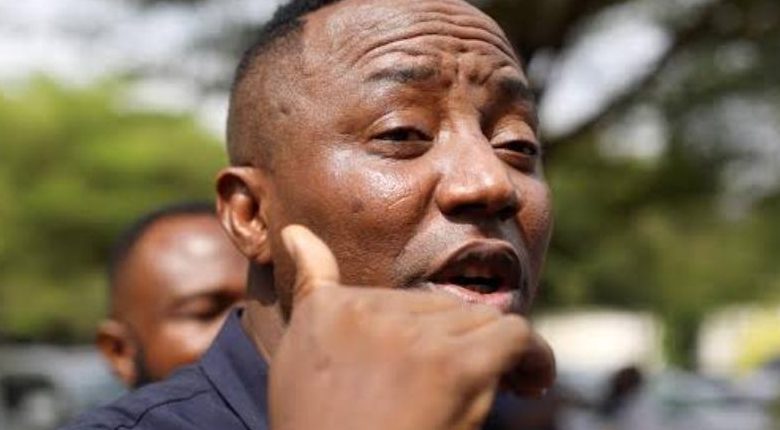
Political activist and former presidential candidate, Omoyele Sowore, has raised fresh concerns over the process through which the nomination forms of President Bola Ahmed Tinubu were reportedly submitted, questioning the legality and transparency of the move.
Sowore, known for his outspoken stance on governance and electoral integrity, faulted what he described as the filing of nomination documents “by proxy,” arguing that such a process could undermine the spirit of Nigeria’s electoral framework.
At the centre of the controversy is the claim that Tinubu’s nomination forms were not personally submitted but handled by a third party. Sowore contends that this approach raises significant legal and ethical questions, particularly regarding compliance with electoral guidelines.
Although Nigeria’s electoral laws outline procedures for candidate nomination, debates have persisted over the extent to which representatives can act on behalf of aspirants during critical stages of the process. Sowore insists that allowing proxies in such circumstances could set a troubling precedent.
He argued that the nomination stage is a crucial aspect of the electoral process that should reflect personal accountability and direct participation by candidates.
The activist urged the Independent National Electoral Commission (INEC) to provide clear guidance on the matter to avoid ambiguity ahead of future elections.
According to him, electoral institutions must not only enforce rules but also ensure that processes are transparent and consistent across all political actors.
While no official statement from INEC confirming any breach has been made public, Sowore’s comments have reignited broader conversations about electoral reforms and institutional credibility.
The issue comes at a time when Nigeria’s political space is witnessing heightened scrutiny, particularly as preparations gradually build toward future election cycles. Analysts note that controversies surrounding nomination processes often reflect deeper concerns about internal party democracy and adherence to due process.
Supporters of the ruling party, however, have downplayed the criticism, maintaining that established procedures were followed and that any actions taken were within the bounds of the law.
Still, opposition voices and civil society groups argue that even perceived irregularities should be thoroughly examined to maintain public trust in democratic institutions.
Legal experts say the debate highlights a grey area within Nigeria’s electoral system. While some aspects of nomination procedures allow for delegation, others emphasize the personal responsibility of candidates.
Sowore’s position appears to align with calls for stricter interpretations of these rules, particularly in high-stakes elections involving major political figures.
He warned that overlooking procedural concerns could weaken accountability and potentially open the door to further disputes during election cycles.
This is not the first time nomination processes have sparked controversy in Nigeria. Disputes over candidate eligibility, documentation, and compliance with electoral laws have frequently led to litigation and political tension.
Observers believe that the current debate underscores the need for clearer legal provisions and stronger enforcement mechanisms to prevent ambiguity.
As discussions continue, attention is likely to remain on how electoral authorities and political stakeholders respond to such concerns.
With Nigeria’s democratic landscape evolving, issues surrounding transparency, fairness, and adherence to electoral laws remain central to public discourse.
Sowore’s criticism, regardless of differing opinions, has once again placed a spotlight on the importance of credible electoral processes and the role of institutions in safeguarding them.
For many Nigerians, the expectation is clear: that every stage of the electoral process, including candidate nominations, should be conducted in a manner that upholds both the letter and spirit of the law.