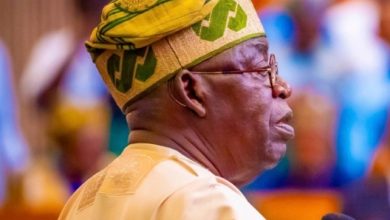
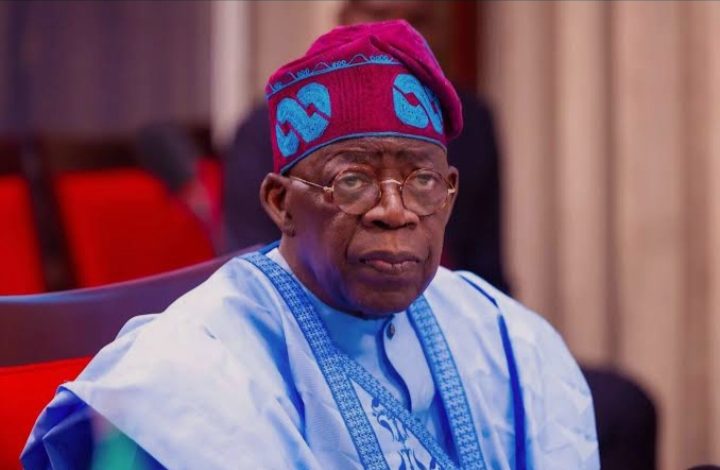
President Bola Tinubu has stirred fresh controversy after declaring that Nigerians who do not pay taxes – and are not legally exempted – should not be considered citizens, insisting that taxation remains the backbone of national development even as economic hardship deepens across the country.
Speaking on Friday at the Africa CEO Forum in Kigali, Rwanda, Tinubu said that while many citizens resist paying taxes, they still expect government to deliver roads, hospitals, infrastructure and essential public services.
“A citizen who pays taxes is a citizen, whether corporate or individual. If you are not a taxpayer and not exempted, then you are not a citizen,” the President said.
He acknowledged that taxation is widely unpopular across all social classes but maintained that no government can function without revenue generated from taxes.
“Taxation is not friendly to the wealthy, the middle class, or the poor. Everyone wants development, but the question they don’t answer is how the government pays for it,” he said.
Tinubu added that citizens often demand major infrastructure without considering how it is funded.
“You want a very good highway, but you don’t want it to go through your land. How do you develop?” he asked.
Describing taxation as painful but necessary, the President likened it to childbirth.
“It is difficult, it is painful, but it is just like the human reproduction process – like a woman going through labour pains and smiling when she sees her child,” he said.
He further questioned how government could deliver quality healthcare, support vulnerable citizens, and invest in key sectors like pharmaceuticals without adequate tax revenue.
“You want a good hospital, well-equipped hospital, and you don’t want to pay taxes. How do you care for the vulnerable and protect the future of the children?” he added.
Tinubu also referenced the COVID-19 pandemic, noting that it exposed global vulnerabilities and reinforced the need for stronger and more reliable revenue systems.
“We remember COVID-19… in a world where you cannot predict exactly what will happen, you must think about where the source and application of funds should be engineered, so that tax is a priority,” he said.
The President’s remarks come at a time of mounting anger over rising taxes, inflation, increased electricity tariffs, fuel subsidy removal and worsening economic hardship in Nigeria.
Critics have accused the Tinubu administration of placing heavier financial pressure on citizens without corresponding improvements in living standards or public services.
Nigeria is currently facing a severe cost-of-living crisis, with millions struggling amid soaring food prices, unemployment and shrinking purchasing power despite ongoing economic reforms.
Earlier, Tinubu disclosed that Nigeria would spend about $11.6 billion on debt servicing in 2026 – nearly half of projected government revenue – while also highlighting global financial challenges facing African nations.
Data from the Debt Management Office (DMO) showed that Nigeria spent $5.15 billion on debt servicing in 2025 alone.
At another summit in Nairobi, Kenya, Tinubu called for reforms of the global financial system, arguing that Africa is disadvantaged by high borrowing costs that limit investment in infrastructure, education and industry.
He stressed that Nigeria is pursuing “painful, homegrown reforms,” including fuel subsidy removal, electricity tariff adjustments, naira floating, and tax restructuring measures introduced since May 2023.
However, these policies have contributed to inflation and currency depreciation, further reducing the purchasing power of citizens.
Despite this, the President insisted the reforms are stabilising the economy and improving investor confidence.
He also revealed that Nigeria has secured over $9.35 billion in World Bank loans between May 2023 and May 2026, with an additional $1.25 billion currently under consideration.
If approved, total World Bank borrowing under his administration would exceed $10.6 billion, even as Nigeria’s public debt reportedly rises above ₦160 trillion.