
World Bank Slashes Nigeria’s Growth Forecast — Fresh Warning Ahead of 2027 Elections.

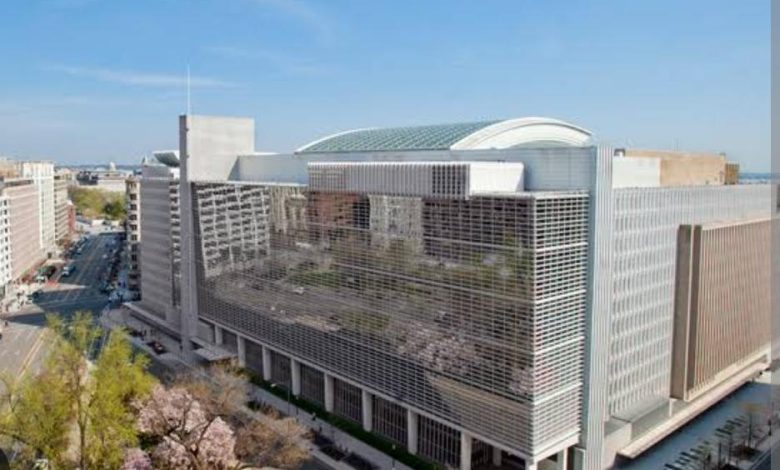
Nigeria’s economic outlook has taken a slight hit after the World Bank revised its growth expectations for the country, trimming earlier projections amid lingering structural challenges.
In its latest assessment, the global financial institution now expects Nigeria’s economy to grow by about 4.1% in 2026, a downgrade from the 4.4% growth it had projected in October 2025. The bank also slightly reduced its forecast for 2027 to 4.2%, while setting a 4.3% growth estimate for 2028.
The revised figures were contained in the April 2026 Africa Economic Update, titled “Making Industrial Policy Work in Africa.” In the report, the World Bank acknowledged that Nigeria’s macroeconomic environment is gradually stabilising and investment activity is beginning to recover. However, it stressed that deep-rooted structural issues continue to limit the pace of economic expansion.
According to the report, the services sector is expected to remain the backbone of Nigeria’s growth in the coming years. Industries such as ICT, financial services, and real estate are projected to drive most of the expansion, while agriculture and industrial production are likely to grow more slowly.
The report also offered a cautiously optimistic outlook on inflation. Consumer prices, which surged in recent years, are expected to decline significantly — falling from around 23% in 2025 to 14.9% in 2026, before easing further to 10.7% by 2028. The anticipated slowdown is attributed to tighter monetary policies implemented in recent years and improvements in supply conditions.
Despite the expected decline in inflation, the World Bank warned that poverty levels in Nigeria remain high and may only reduce gradually. Persistent high fuel prices — partly linked to ongoing global conflicts — could continue to strain household incomes.
The institution also highlighted several risks that could slow economic progress. These include volatility in global commodity prices, tighter financial conditions worldwide, insecurity in parts of the country, and fluctuations in capital flows.
Another concern flagged in the report is the policy uncertainty that typically precedes major elections, with Nigeria’s 2027 general elections expected to influence investor confidence and economic stability in the coming years.
Across the broader region, Sub-Saharan Africa’s economy is projected to expand by 4.1% in 2026. While that figure remains unchanged from the 2025 estimate, it represents a 0.3 percentage-point downgrade from earlier forecasts. Nigeria joins other major economies in the region — including South Africa, Angola, and Kenya — whose growth outlooks were also revised downward.
Still, the World Bank noted that many African economies are beginning to benefit from improved macroeconomic stability, easing inflation, and stronger domestic currencies — factors that could help boost consumer spending and encourage investment across the region.