
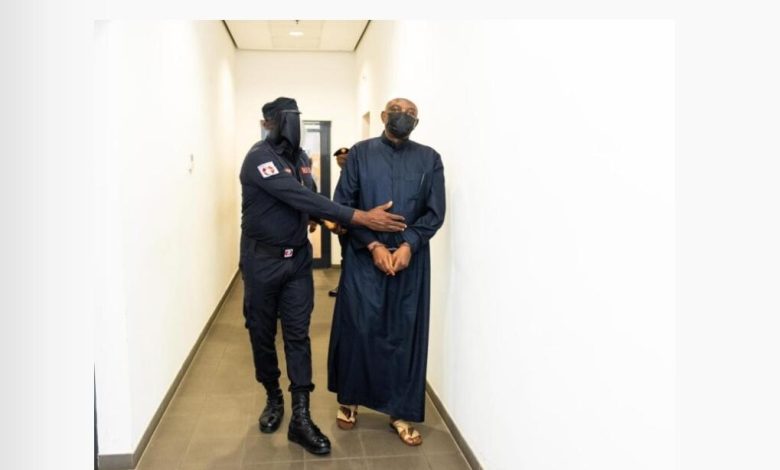
The Economic and Financial Crimes Commission (Economic and Financial Crimes Commission) has taken former Minister of Power, Saleh Mamman, into custody following his conviction in a high-value corruption case involving alleged diversion of ₦33.8 billion.
Authorities confirmed that the former minister was arrested after a Federal High Court ruling that found him guilty of multiple counts related to financial misconduct during his tenure in office. The case centers on funds originally earmarked for critical national electricity infrastructure projects.
According to court proceedings, the charges against Mamman involved the alleged mismanagement and laundering of public funds connected to major power initiatives, including hydropower developments intended to improve Nigeria’s electricity supply. The judgment delivered by the court resulted in a cumulative sentence spanning several decades across multiple counts.
Security officials say the arrest became necessary after the former minister reportedly failed to immediately begin serving his sentence, prompting enforcement action. His detention marks a significant step in the implementation of the court’s decision and the continued prosecution of high-profile corruption cases.
The EFCC, in its follow-up actions, stated that the arrest aligns with its ongoing mandate to ensure that individuals convicted of financial crimes face the consequences of their actions, particularly in cases involving public funds. The agency has intensified efforts in recent years to recover stolen assets and prosecute corruption cases across government sectors.
Although the case has drawn wide public attention, no additional official statement or direct quote from the EFCC leadership or the convict was immediately released at the time of reporting. Further updates are expected as legal processes continue.
Mamman’s case has remained one of the most closely followed corruption trials in Nigeria’s power sector, largely due to the scale of the funds involved and the strategic importance of the projects allegedly affected. The Mambilla and Zungeru hydroelectric schemes, referenced during proceedings, are considered key national infrastructure projects aimed at boosting electricity generation capacity.
Legal analysts note that the enforcement of the judgment sends a strong signal regarding accountability in public office, especially concerning financial management of large-scale federal projects. The case is also being viewed as part of broader efforts to strengthen anti-corruption enforcement in Nigeria’s governance system.
The EFCC is expected to complete the formal processing of Mamman into custody, after which he will begin serving the sentence as ordered by the court.
No verified public statement or quote was available from either the court or the defendant at the time of publication.