
Gojek Founder Jailed: Ex-Minister Breaks Down After 10-Year Corruption Verdict

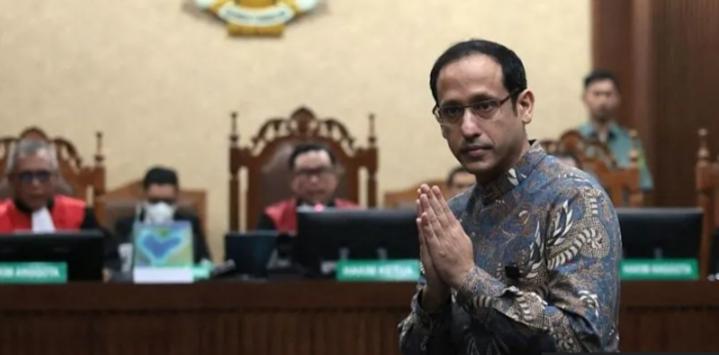
One of Southeast Asia’s biggest tech success stories took a dramatic turn on Tuesday as former Indonesian Education Minister and Gojek co-founder, Nadiem Makarim, was sentenced to prison in a high-profile corruption case that has divided opinion across the country.
The 41-year-old entrepreneur was handed a 10-year jail term by the Jakarta Anti-Corruption Court on June 30, 2026, after being found guilty of corruption linked to a controversial government laptop procurement programme. Although he had pleaded not guilty throughout the trial, the court ruled that he abused his authority while serving in government.
Makarim, who founded ride-hailing and digital payments giant, Gojek, before joining the administration of former President, Joko Widodo, in 2019, served as Indonesia’s Education Minister until 2024.
In addition to the prison sentence, the court ordered him to pay restitution of 809 billion rupiah, equivalent to about $45 million or £34 million, or serve an additional five years behind bars if he fails to pay. Makarim has said he cannot afford the payment, meaning he effectively faces a 15-year sentence.
He was also fined one billion rupiah and faces an extra 190 days in prison if the fine remains unpaid.
The case centred on the Education Ministry’s procurement of Chromebook laptops for Indonesian schools between 2021 and 2022.
Prosecutors argued that the government proceeded with the purchases despite findings made in 2018 that the devices required stable internet access and were therefore unsuitable for many remote parts of Indonesia where connectivity remains poor.
According to prosecutors, the procurement moved ahead after Makarim met representatives of Google in 2020.
They alleged that Makarim favoured Google, an investor in Gojek, by designing tender requirements that effectively suited only the Chrome ecosystem and would make the technology giant “the sole controller of the education ecosystem in Indonesia”.
Prosecutors further argued that Makarim retained a minority stake in Gojek while serving as Minister and that his actions violated the government’s anti-corruption commitments while causing losses estimated at $125 million to the state.
He was also accused of benefiting from transactions worth 809 billion rupiah involving Gojek’s holding company.
Makarim denied any connection between Google’s investment in Gojek and the Chromebook procurement exercise, insisting that the decision reduced costs for the government.
He also maintained that the 809 billion rupiah remained within company accounts and was never personally accessed by him.
In its ruling, the panel of judges said prosecutors failed to prove that Makarim had unlawfully enriched himself. However, the court concluded that he had abused his office and acted under a conflict of interest that favoured his corporate relationships and business interests.
Scenes outside the courtroom reflected the deep divisions surrounding the case.
Dozens of supporters, including Gojek drivers dressed in the company’s trademark green jackets, gathered outside the Jakarta courthouse carrying banners reading “We are with Nadiem” and “Free Nadiem”.
“It’s been difficult for almost 10 months. As a family, we have continued to pray, fight, and stand by him throughout this time,” his mother-in-law, Sania Makki, told the BBC before proceedings began.
Makarim appeared emotional as the verdict was read and broke down in tears while supporters outside the courtroom responded with loud boos.
Still visibly emotional after leaving court, he embraced supporters and announced plans to challenge the judgment.
“I do not know what words I can use to explain how I feel today,” he said.
“I do not know whom I should ask for help, or where I can seek justice. My only hope is in the Indonesian people, in those who still believe that truth still exists in this country.”
The verdict has sparked debate in Indonesia, with critics arguing that the case reflects a broader pattern of using anti-corruption prosecutions against political opponents and critics of those in power.
Lawyer and activist, Todung Mulya Lubis, said the country’s anti-corruption drive was increasingly being weaponised against those seen as unfavourable to the political establishment.
Political activist, Andovi da Lopez, warned that the conviction could discourage young professionals from entering public service, while Usman Hamid described Makarim as someone who wanted to drive change but became trapped within a system facing deep structural problems.
Observers have also compared Makarim’s case with those involving former Trade Minister, Tom Lembong, and party official, Hasto Kristiyanto, both political allies of former President, Widodo, who were later pardoned by President Prabowo Subianto in the name of national reconciliation.
The judgment comes amid growing frustration among young Indonesians over rising living costs, a weakening rupiah and government policies that have triggered protests across the country in recent weeks.